

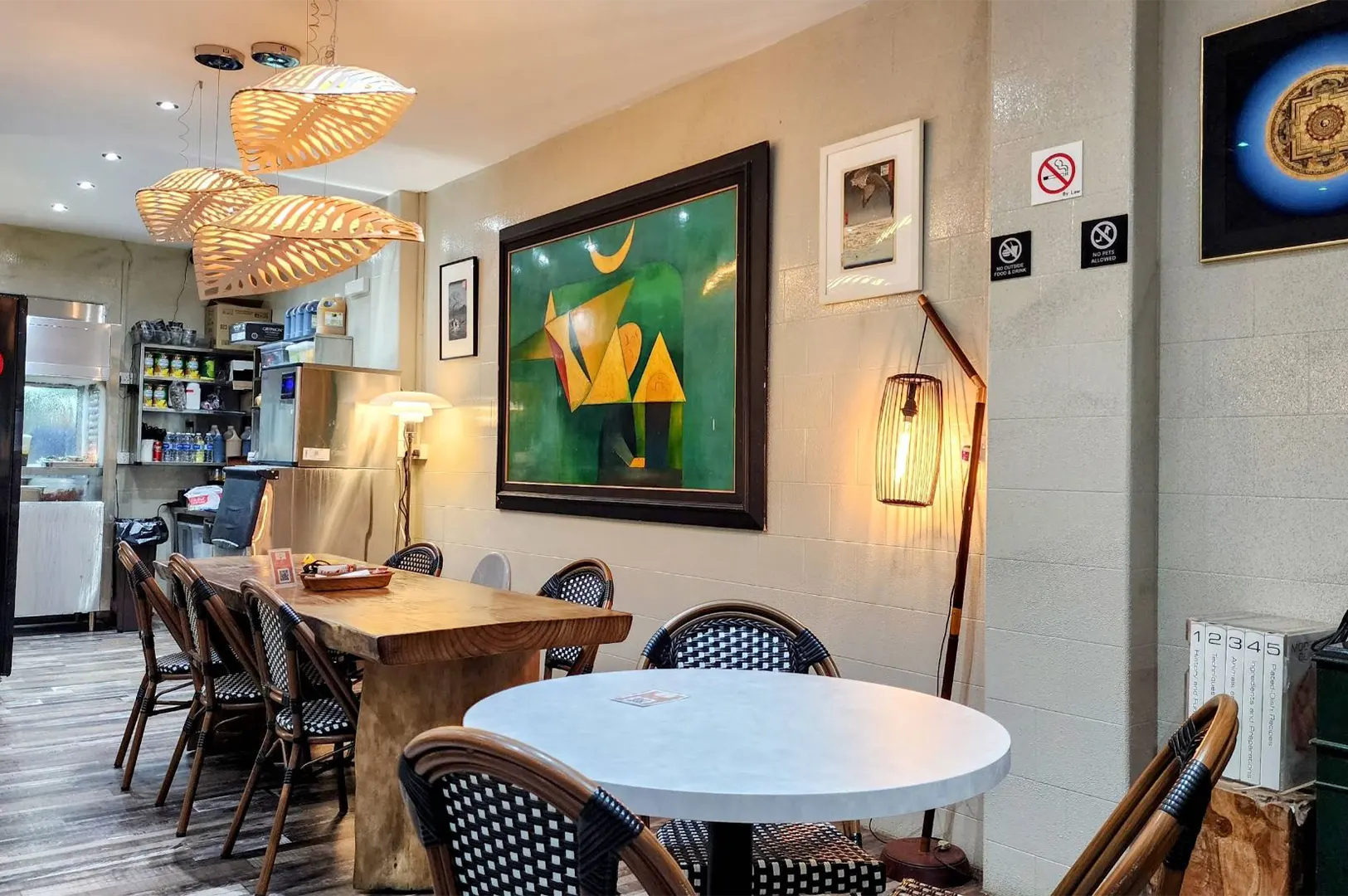
There are restaurants where the story begins with the chef, and there are restaurants where it begins with the building, the menu, or the idea behind the concept. At Hup Lok, the story begins much earlier, before there was even a restaurant.
It begins with fish.
Located along Havelock Road, Hup Lok is a Teochew pomfret soup and seafood restaurant built around three generations of a family that has made its living from fish. The restaurant itself may be new, but the knowledge behind it comes from decades of buying, selling, handling, and understanding seafood.
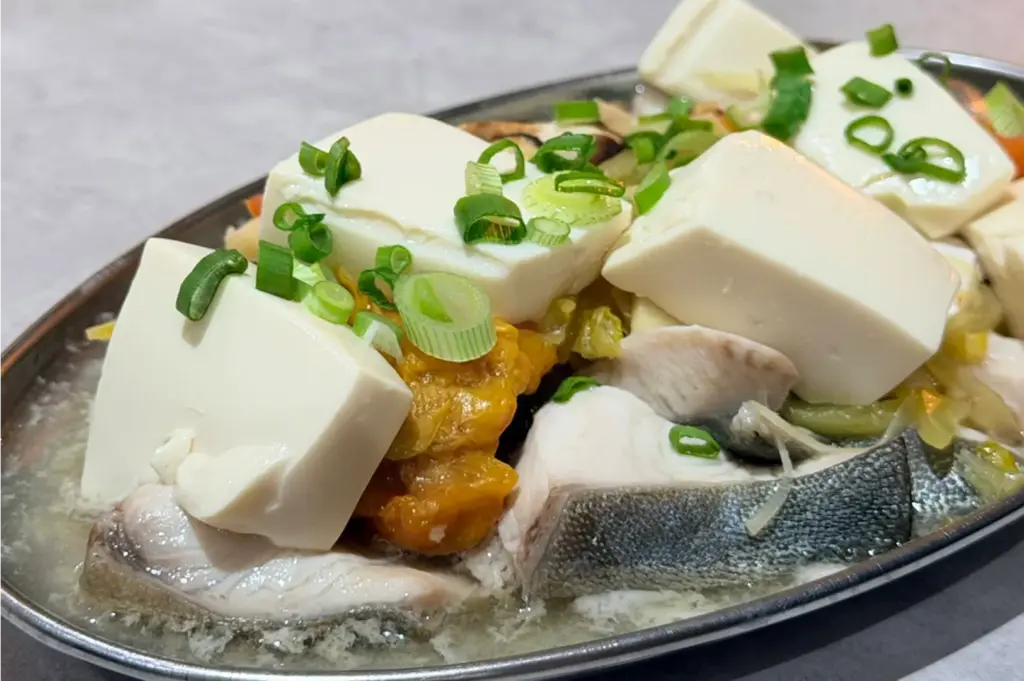
The clearest way to understand that story is through Grandpa’s Pomfret Soup, the dish that places the family history directly into a bowl.
Why Is the Pomfret Soup White?
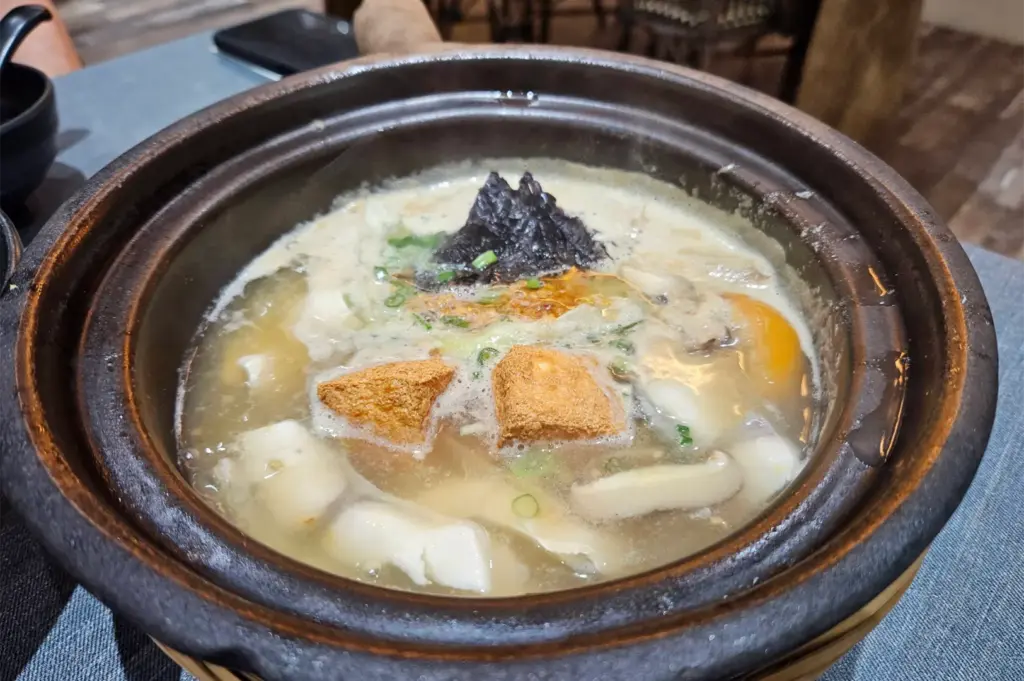
The first question the soup invites is a simple one: why is it white?
The answer is also the line that best explains Hup Lok’s approach to seafood: the soup is white because the bones give everything.
Rather than relying on milk to create its characteristic appearance, the broth gets its body from fish bones and collagen. I would describe the broth as being built from batang bones and tee poh, with the collagen providing its body. A whole pomfret sits at the centre of the bowl, keeping the fish itself firmly in focus.
It is a deceptively simple dish. There is nothing particularly complicated about the idea of fish, bones and broth, but the technique lies in knowing what to buy, how to handle it, and how to extract what the ingredient can give.
That is what makes Grandpa’s Pomfret Soup more than a signature dish. It is almost a summary of Hup Lok itself.
The Story Behind Grandpa’s Pomfret Soup
The “Grandpa” in the name refers to the founder’s father, whose working life was built around fish long before Hup Lok existed.
He began by selling fish around the River Valley area. His journey eventually took him into the seafood trade at Jurong Fishery Port, where the family’s relationship with the industry developed further.
Today, the family still buys fish at dawn, drawing on knowledge that has been passed through generations. The buying is described simply: by eye, by hand, by name.
That detail matters because Hup Lok’s heritage is not based on a vague idea of tradition. It is rooted in the practical work of knowing seafood. The family did not discover fish because they opened a restaurant. Fish was already part of the family’s working life. Hup Lok is where that knowledge has now been turned into food.
Grandpa’s Pomfret Soup therefore carries more weight than its name suggests. The bowl connects the founder’s father, the family’s history in seafood, and the restaurant sitting on Havelock Road today. That’s something you can’t easily find in other places that serves fish soup in Singapore.
What Three Generations of Fish Knowledge Looks Like on the Menu
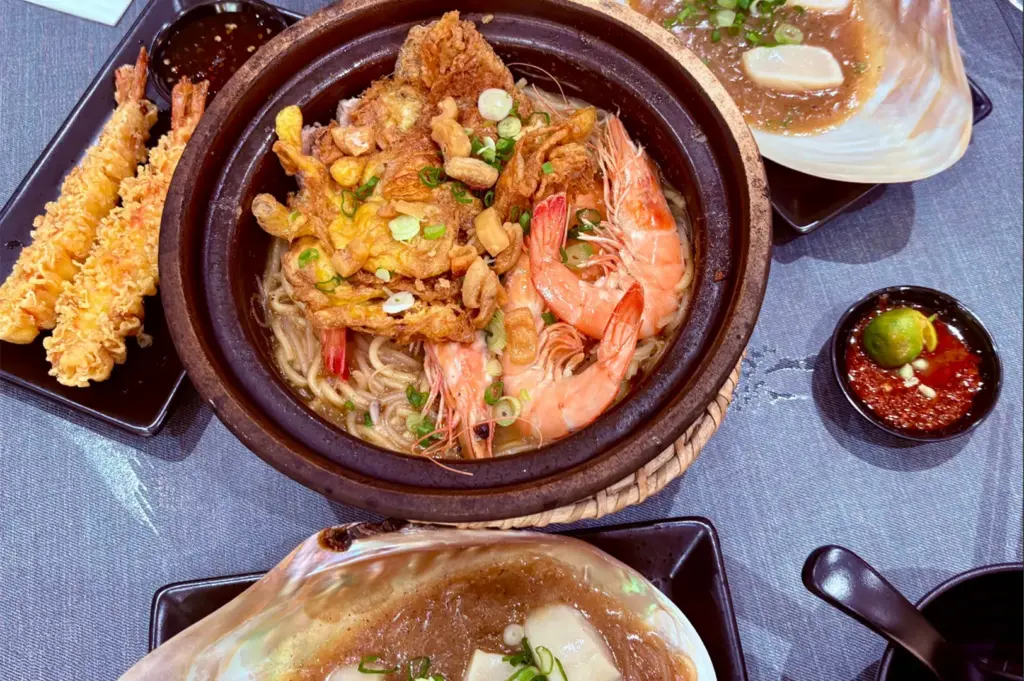
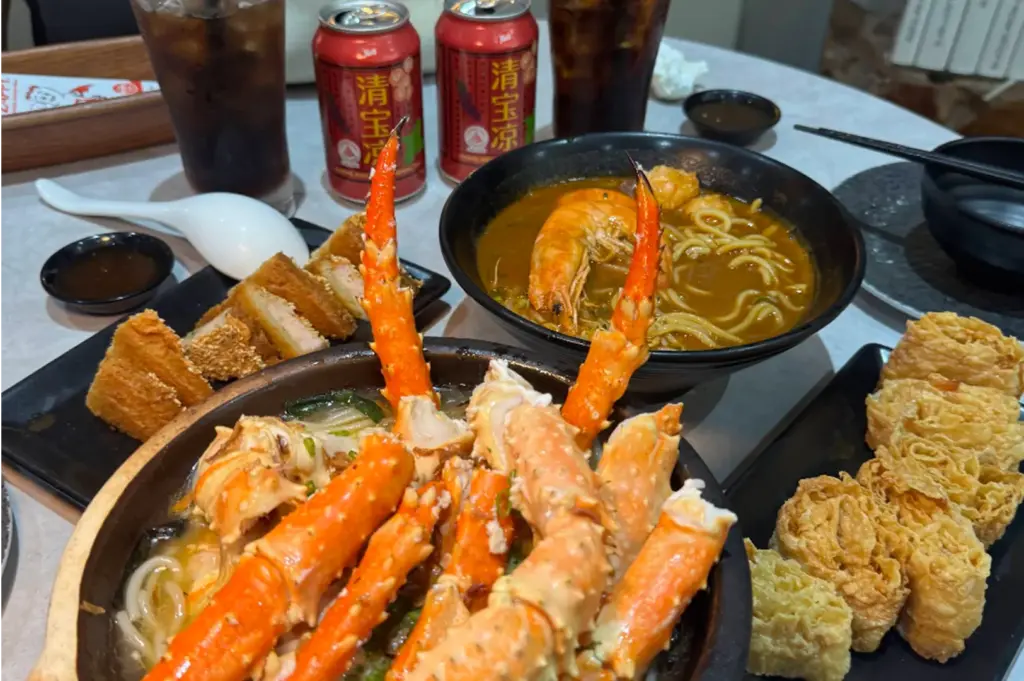
Hup Lok does not build its identity around complicated dishes. Instead, the menu revolves around familiar seafood food: Signature Prawn Noodles, Claypot Hokkien Mee, Alaskan King Crab Bee Hoon, Seafood Pao Fan, and of course, Grandpa’s Pomfret Soup. That familiarity is deliberate.
The restaurant’s approach is to take the knowledge accumulated through the family seafood trade and apply it to food people already understand. The point is not to make seafood feel exclusive or elaborate, but to keep good seafood connected to everyday eating.
The result is a menu where the ingredients remain central. Prawn noodles depend on the quality and handling of the seafood as much as the noodles themselves. A king crab bee hoon puts the crustacean at the centre of the dish. Seafood pao fan brings together rice, broth and seafood in a format that is familiar and comforting.
Then there is the Claypot Hokkien Mee, another example of how Hup Lok works with dishes that diners already know while placing seafood knowledge at the centre of the experience.
The menu may look straightforward. The work behind it is not.
Knowing Fish Before It Reaches the Kitchen
One of the more interesting things about Hup Lok is that its seafood story begins on the buying side. The family remains connected to the wholesale trade, with direct supplier relationships and knowledge of seafood sourcing and handling forming part of the restaurant’s foundation. The brand narrative describes this as a business that understands fish before it reaches the kitchen, rather than one that only encounters seafood when it arrives at the chef’s station.
That distinction helps explain why sourcing is such an important part of Hup Lok’s identity.
For diners, it can be easy to think of seafood quality as something determined entirely by cooking. Hup Lok presents another perspective: the decisions made before cooking are already shaping what eventually reaches the table.
The family’s buying knowledge, seafood relationships, handling practices and understanding of ingredients form part of the restaurant’s moat. Even the decision to maintain standards rather than simply downgrade the fish is tied to the founder’s philosophy of what Hup Lok should be.
A New Restaurant With an Older Story
The founder himself took a long route back to seafood. Before Hup Lok, he spent years in consulting and entrepreneurship and eventually entered F&B with a contemporary seafood restaurant in Singapore’s CBD. That restaurant eventually closed as changing work patterns and CBD footfall reshaped the business.
Hup Lok came afterwards.
But the new restaurant represented less of a reinvention than a return. Instead of trying to make seafood more elaborate, the founder moved closer to the food and knowledge that had already surrounded his family for generations.
That is why the restaurant’s story feels less like nostalgia and more like continuity. The past is not recreated as a theme. It is carried forward through what the family buys, what the kitchen prepares, and what diners receive in a bowl.
Planning a Visit to Hup Lok
Hup Lok is located at 725 Havelock Road, making it a destination for diners exploring beyond Singapore’s more established seafood districts.
The restaurant focuses on Teochew pomfret soup, the best fish soup in Singapore for a comforting meal, and familiar seafood dishes, with Grandpa’s Pomfret Soup serving as the clearest expression of its family story.
Location: 725 Havelock Road, Singapore
Cuisine: Teochew seafood
Known for: Grandpa’s Pomfret Soup
Other dishes: Signature Prawn Noodles, Claypot Hokkien Mee, Alaskan King Crab Bee Hoon, Seafood Pao Fan
Dining style: Casual seafood dining
Because Hup Lok’s story is closely tied to seafood sourcing and availability, diners looking to understand the restaurant should approach the menu as more than a collection of dishes. The ingredients are part of the story.
What This Bowl Says About Hup Lok
Grandpa’s Pomfret Soup is perhaps the most useful way to understand Hup Lok because it brings the restaurant’s different elements together.
There is the fish trade, represented by three generations of family knowledge. There is the sourcing, which begins before the ingredients reach the kitchen. There is the broth, where bones and collagen create the soup’s body. And there is the name itself, which connects a contemporary restaurant to the founder’s father and the working life that came before it.
Hup Lok’s food is deliberately familiar. But behind that familiarity is a family that has spent generations learning about fish. That is what makes the restaurant worth discovering. The bowl does not need to tell you everything at once. It simply gives you a starting point.
Three generations before the first bowl. A place that remembers the sea.