

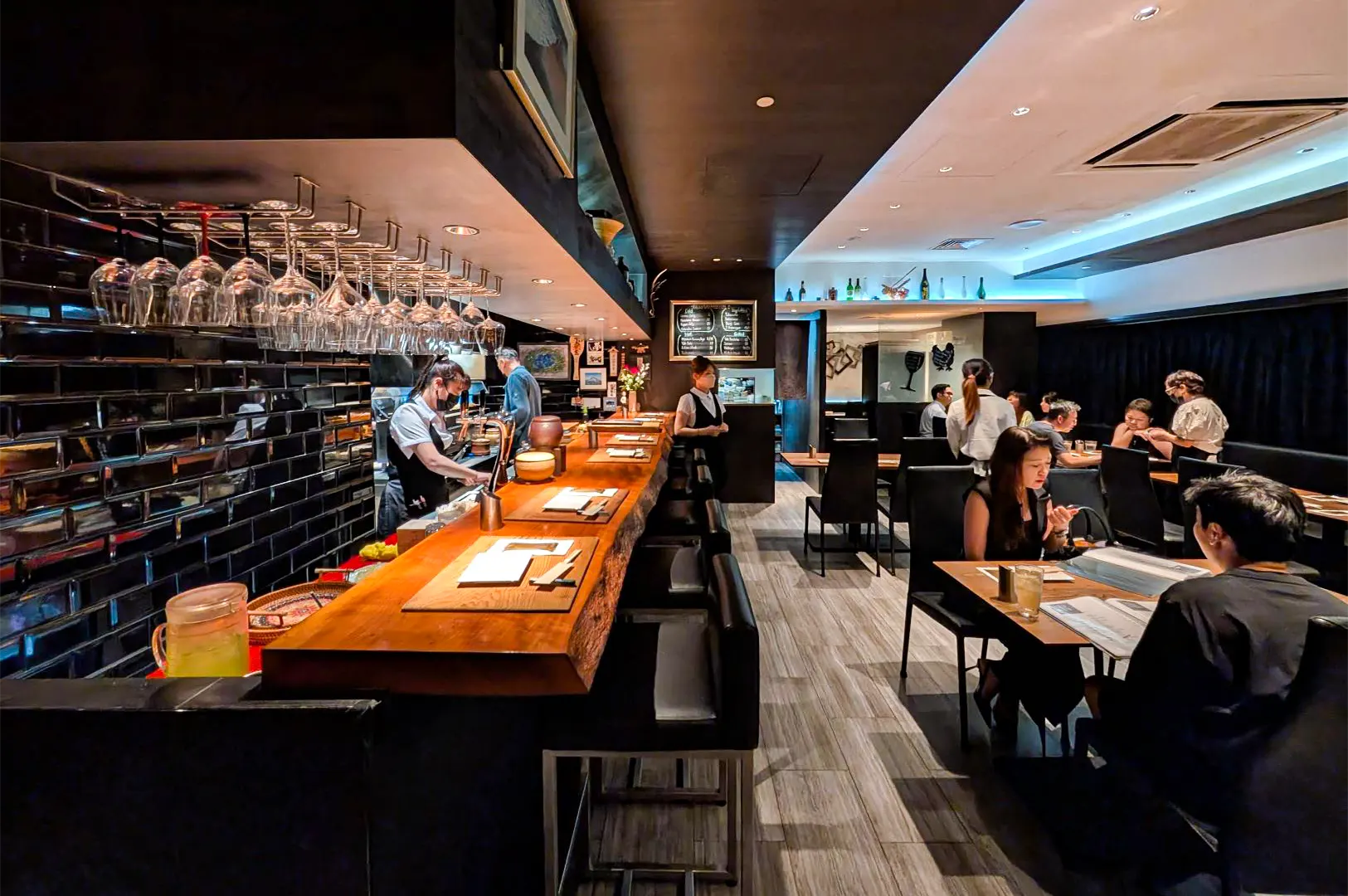
I had walked past Cuppage Plaza more times than I can count before a friend finally pulled me inside one evening. We took the lift up, stepped into the corridor, and found Kazu Sumiyaki Restaurant tucked away as one of cuppage plaza’s hidden food spots. The door slid open, and the first thing that reached me was the smell of charcoal. Warm, smoky, faintly sweet. It settled something in me before we even sat down.
If you have ever wanted a real izakaya night in Singapore, the kind where you linger and let the meal unfold slowly, this is the place I keep thinking about. Let me tell you about it the way I would tell a friend over the phone the next morning.
Finding Kazu Sumiyaki Restaurant in Cuppage Plaza
The address is simple enough: 5 Koek Road, #04-05, Cuppage Plaza, just a short walk from Somerset MRT Station. But finding Kazu Sumiyaki still feels a little like a small discovery. Cuppage Plaza is older, quieter, less polished than the malls nearby, and that suits this sumiyaki restaurant perfectly.
A quick note before you go. Kazu opens Tuesday to Saturday, 6:00 PM to 11:30 PM. It closes on Mondays and generally on Sundays too, though some listings mention the occasional Sunday opening. The space is compact and often fully booked, so a reservation is honestly the only way to be sure. We made a booking ahead of time, and I am glad we did. Two walk-in guests beside us were gently turned away that night.
What struck me most is the history. Kazu has been here since 1993, which makes it one of Singapore’s longest-running Japanese izakayas. Over three decades in the same unit. You feel that weight the moment you step in. This is not a trend. It is a tradition that has simply kept going.
The Room, the Charcoal, and the Chefs at Work
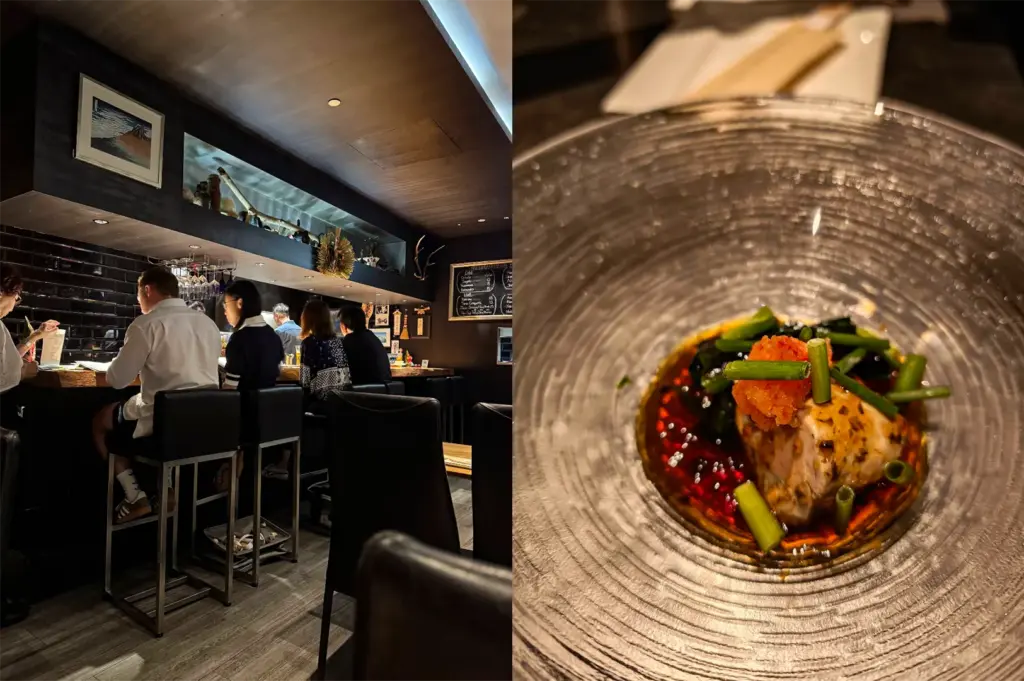
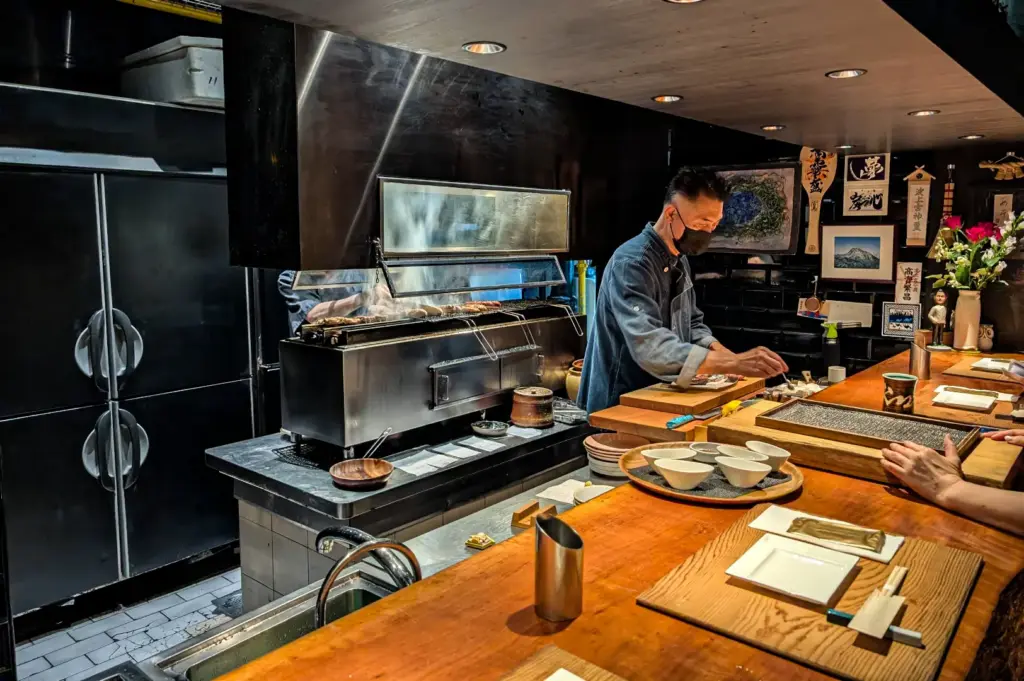
Inside, the lighting is low and the wood is dark and worn in a way that feels lived in rather than tired. There is counter seating along the grill and a handful of small tables. If you can, ask to sit near the grill. Watching the chefs work over the charcoal is half the dining experience.
I sat close enough to feel the heat lift off the coals. The chefs moved with a calm, practiced rhythm, turning skewers, brushing on soya sauce, sprinkling salt with the kind of ease that only comes from years of repetition. No rush, no show. Just steady, careful cooking.
The room hums. Conversations overlap, sake is poured, plates clink, and the charcoal crackles underneath it all. It is lively without being loud, intimate without feeling cramped. The sumiyaki restaurant carries a genuine warmth that you cannot manufacture.
How to Eat at This Sumiyaki Restaurant
Here is the simplest way to start. Do not order everything at once. The izakaya rhythm works best when dishes arrive gradually, so you order a few skewers, add a seafood dish or a seasonal special, then keep going from there as your appetite leads you.
We followed that flow, and it made the meal feel unhurried. A skewer here, a small plate there, a pause for sake, then another round. The seasonal menu is worth asking about too. Some of the most interesting specialties are not printed anywhere. They appear on a handwritten board, often showcasing seasonal ingredients flown in from Japan, sometimes from Hokkaido.
A practical tip: keep your drinks slow and your ordering slower. The kitchen rewards patience, and the gradual pace is part of why people settle in for a long evening here.
Traditional Yakitori and the Skewers I Keep Thinking About
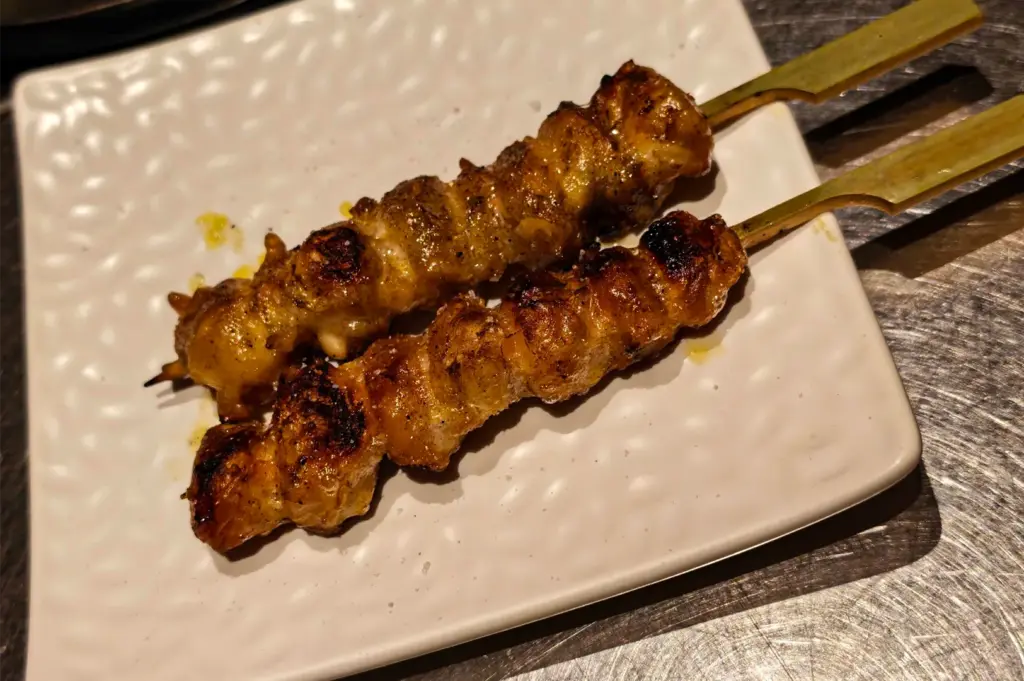
The grilled skewers are the heart of Kazu, and the traditional yakitori is where I would tell anyone to begin. We started with chicken skin, which came off the charcoal with crisp edges and rendered fat, smoky and almost addictive. The chicken heart and chicken gizzard followed, both firmer in texture and full of that deep grilled flavour.
Then came the nama tsukune, freshly minced chicken meatballs grilled until juicy with a soft, smoky finish. I could have eaten three more. The foie gras skewer is the one everyone mentions, and now I understand why. Smoky on the outside, rich and almost melting inside, it is a small, indulgent highlight that lingers.
For something more unusual, the tontoro ringo pairs fatty pork belly with apple. The rich pork belly and the gentle sweetness of the apple play off each other beautifully. Don’t miss it. The marinated beef tongue is another one of those quietly memorable meats, tender and savory in a way that makes you slow down and pay attention.
Seafood, Sashimi, and Other Dishes Worth Trying
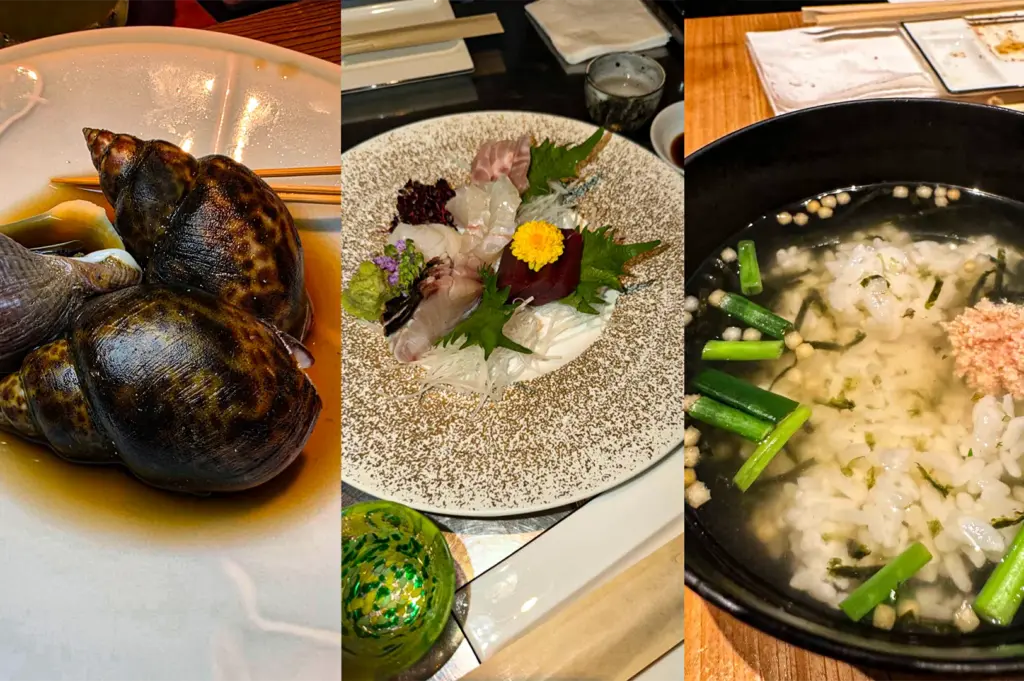
Beyond the yakitori, Kazu shows another side. The hotate kai, a grilled scallop, arrived sweet and tender with just enough char to complement its softness. The sawara kizushi, marinated Spanish mackerel topped with ikura, felt more refined, the kind of dish you eat slowly and remember.
There is fresh sashimi and seasonal seafood too, depending on what is good that week. The quality leans toward the careful and the considered. This is broader Japanese dining tradition at work, where seasonal seafood, sashimi, and grilled meats sit comfortably on the same menu. If chicken sashimi or other raw chicken specialties appear, treat them as part of that wider Japanese izakaya context and order based on your own comfort.
Small touches matter here. A little wasabi, a knob of ginger, fresh onions, a brush of garlic, a hint of miso. These quiet seasonings let the charcoal flavour stay at the center while still rounding out each plate. Even a simple side of tofu, sometimes prepared with uni and a wasabi dressing, felt considered.
Desserts and the End of the Night
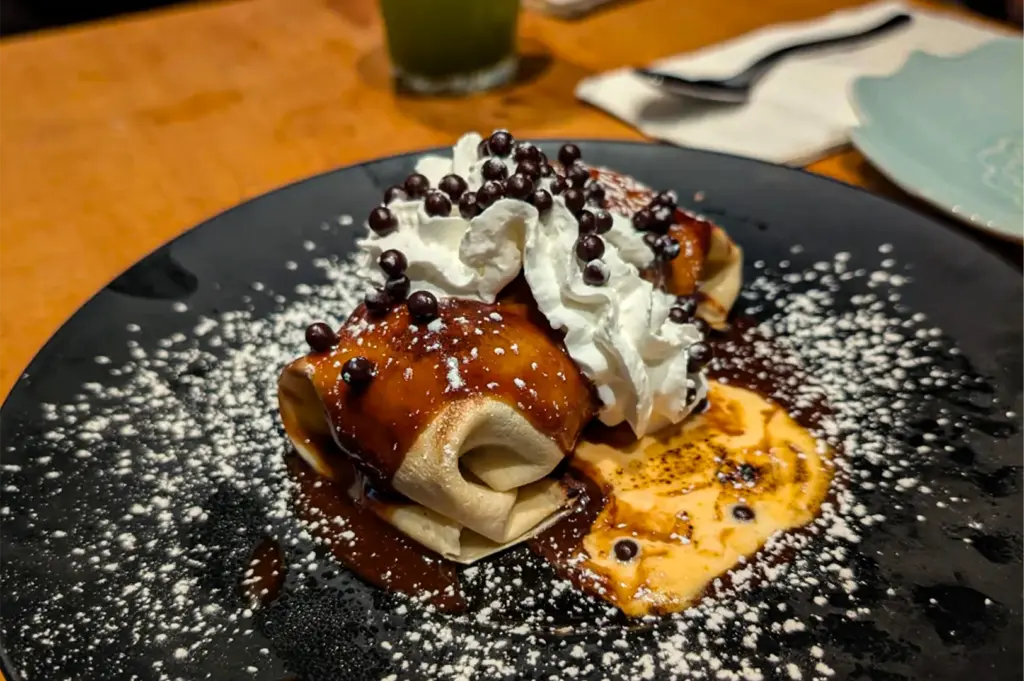
We finished with two desserts. The Japanese sweet potato is humble and traditional, simple in the best way, warm and naturally sweet. Then there was Awayuki, Kazu’s signature ice cream wrapped in mochi, soft and cool and the perfect gentle ending after all that smoke and salt.
By then the room had settled into a slower hum. Sake glasses sat half empty, plates were cleared, and nobody seemed in a hurry to leave. That, more than anything, told me what kind of place this is. It is built for staying, not rushing.
A few honest notes on the experience. Expect to spend somewhere around S$50 to S$80 or more per person, depending on how many skewers and drinks you order, and whether you reach for the seasonal specials. The service is warm and attentive without hovering. It is not budget food, and it is not a quiet business dinner spot. It is an izakaya in the truest sense, lively and close and full of life.
A Few Things to Know Before You Go
If you are planning your own evening at Kazu, here is the short version of what I would pass along:
Secure a reservation. The restaurant is small and fills quickly, especially on Friday and Saturday evenings. A booking saves you the disappointment.
Sit near the grill if a counter seat is available. The cooking is part of the meal.
Order gradually. Start with a few skewers and a seasonal dish, then continue at your own pace.
Ask about the specials board. That is where the seasonal Japan imports often appear, like bamboo shoots or other delicacies.
Go with someone you can talk to for hours. This is a place for couples, small groups, and anyone who loves real Japanese food.
The Heart and Soul of Charcoal Grilling at Kazu Sumiyaki
I left Kazu that night feeling like I had been let in on something. Not a secret exactly, but a steady, well-worn tradition that has quietly survived in the same corner of Cuppage Plaza for over thirty years. The charcoal, the skewers, the sake, the slow flow of dishes, the chefs working without fuss. It all adds up to a dining experience I would happily repeat.
If you find yourself near Somerset with an empty evening ahead, make a booking and go discover it for yourself. Just remember to take your time. Kazu is highly recommended, but only if you let it move at its own gentle pace.
If you’re intrigued by Kazu Sumiyaki’s hidden charm, you’ll love exploring this curated guide to Cuppage Plaza’s secret food treasures that await just around the corner.