

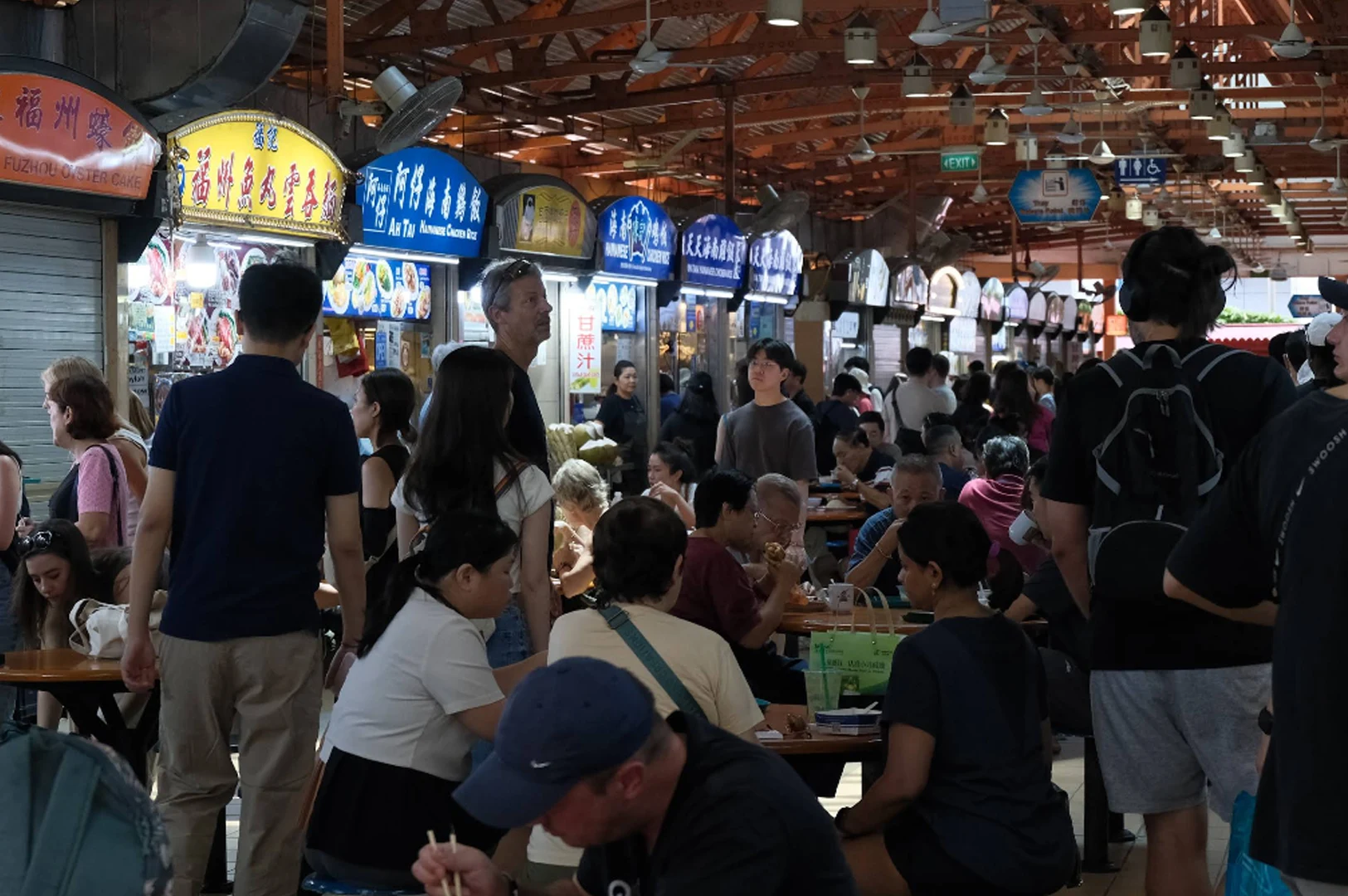
Maxwell Food Centre is one of Singapore’s most popular hawker centres, known for its famous chicken rice but also home to many lesser-known stalls favored by locals and office workers. This guide explores those hidden gems beyond the usual crowds.
5 Hawker Food Stalls Bursting with Local Flavors
1. Somerset Delicacies
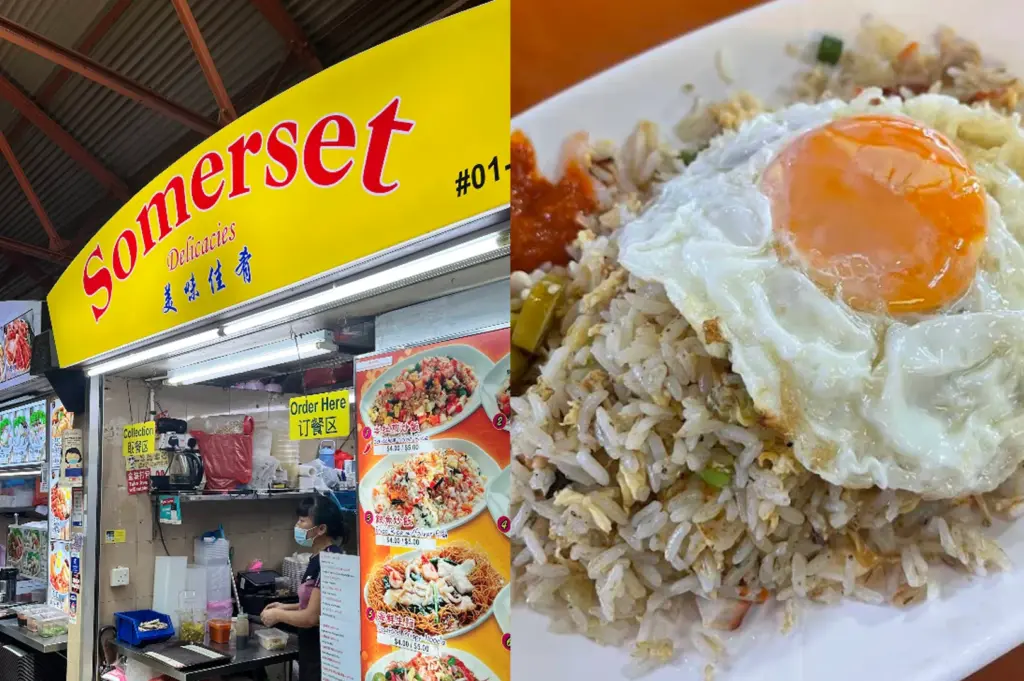
Somerset Delicacies (#01-60) is the kind of stall I’ve found doesn’t need a Michelin sticker to stay busy. It’s a low-profile zi char operation loved by nearby office workers for its straightforward fried rice and noodle staples, the kind of food that gets me through a Wednesday afternoon. You’ll find it around the middle row of individual stalls facing the inner seating area, a few units down from Sichuan Cuisine and Taste Of Jiang Nan. It’s not flashy, but regulars know exactly where to look.
What to order:
Belachan Fried Rice (S$4–S$5) – punchy, aromatic, the clear favorite, topped with fried shallots and minced meat
Mixed Seafood Hor Fun (S$4–S$5) – smoky flat rice noodles with a savoury sauce that coats every strand
Egg Fried Rice – simple, reliable, good for pairing with other dishes, with options to add luncheon meat or shredded chicken for extra flavor
2. 1980 Penang Prawn Noodle
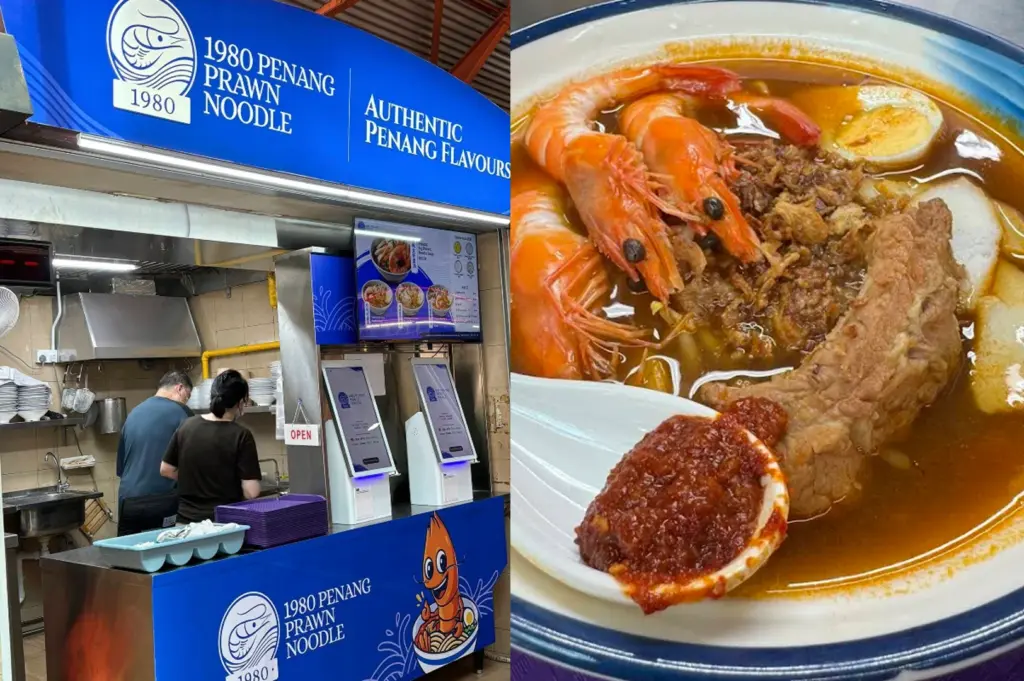
1980 Penang Prawn Noodle specialises in Penang-style prawn mee with a robust, prawn-forward broth that tastes distinctly different from typical Singapore versions. The soup is darker, richer, and hits with that unmistakable crustacean depth that Penang food lovers seek out.
The stall sits along the row nearer to the Maxwell Road side, a short walk from Danlao and Taste Fusion Hainanese Chicken Chop, facing the outer perimeter seating. It’s not hard to find once you know what you’re looking for.
What to order:
Signature bowl: Penang Prawn Noodle Soup – whole fresh prawns, pork ribs, and that signature reddish broth
Pork Ribs Prawn Noodle – for those who want extra meat, including tender pork chop pieces
Dry version (if available) – ask at the counter
Spice level: Can be adjusted; the default has a comfortable kick without overwhelming heat
- Good for: Quick solo meals, especially if you want something warm and filling
3. Wa Ree Boat Noodle Thai Cuisine – Bangkok-Style Bowls in a Hawker Centre
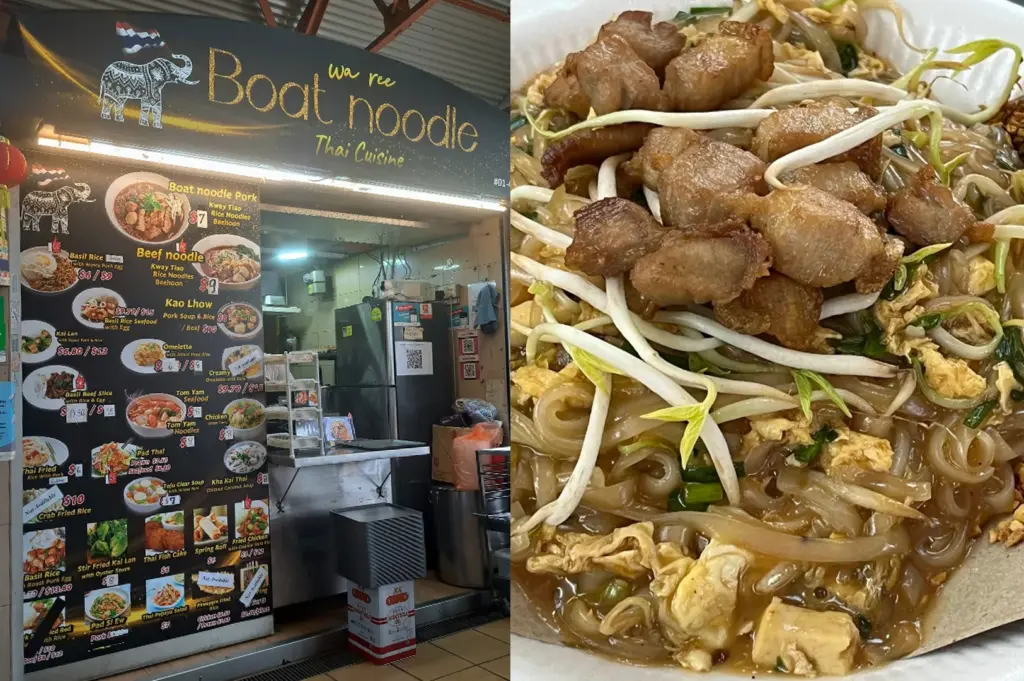
Wa Ree Boat Noodle Thai Cuisine (#01-44) brings authentic Thai boat noodles and classic Thai dishes into the Maxwell Food Centre ecosystem. It’s a Thai-run stall serving the kind of dark, aromatic broth you’d find at a Bangkok street stall, not watered-down approximations.
The stall sits near the end of one row facing the South Bridge Road side, a few stalls away from other foreign cuisine options such as Vietnamese banh mi spots. It’s easy to walk past if you’re not looking for it.
What to order here:
Beef or Pork Boat Noodles – small, intense bowls with dark, aromatic broth (traditional style), served with rice noodles and fresh prawns
Tom Yum Seafood Noodles – for those who want sour soup heat with fresh prawns and fish
Green Chilli Chicken Rice with rice – solid comfort option, a must-try alongside the green chilli chicken rice
Approximate pricing: S$6–S$8 per dish
4. Rojak, Popiah & Cockle – Classic Snacks That Stay Out of the Spotlight
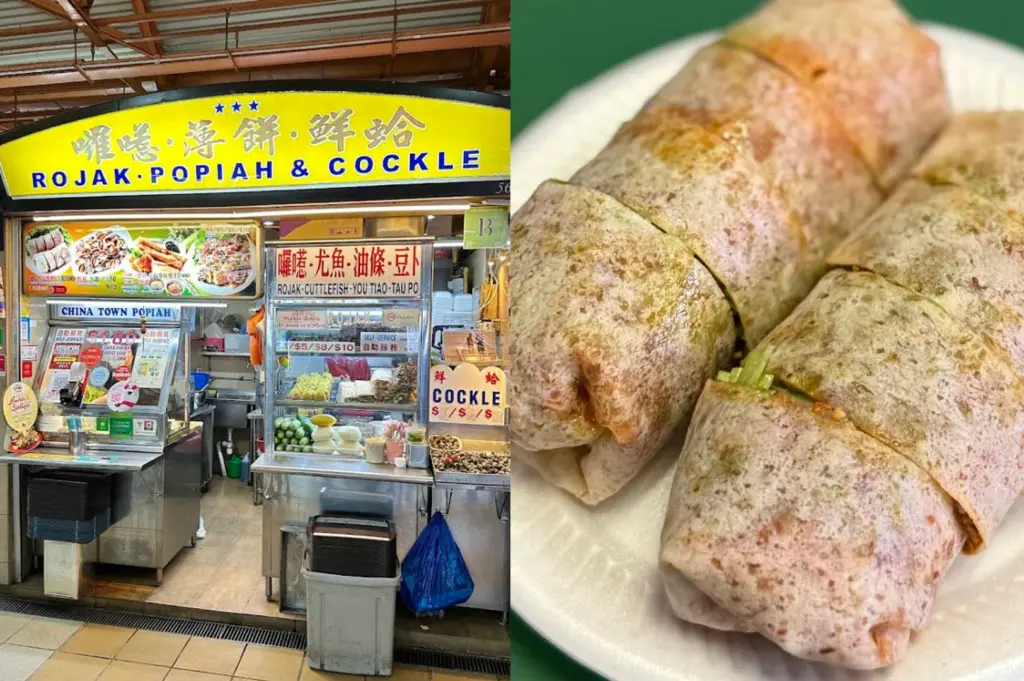
Rojak, Popiah & Cockle (#01-56) is an old-school stall that quietly serves indulgent Singaporean rojak, moist spring rolls popiah, and cockles on the side. It’s the kind of place that makes me wonder why I don’t eat rojak more often.
You’ll find it positioned along the interior row near fish soup and fish porridge stalls such as Yi Jia Teochew Fish Porridge. Look for the large rojak mortar and pestle at the counter—that’s your visual cue.
What to order here:
Classic fruit-and-vegetable rojak with prawn paste sauce, topped generously with chopped peanuts and fried shallots
Popiah with juicy turnip filling – the wrapper stays intact, the filling stays moist, and the filling is seasoned with five spice powder and a touch of spice powder for extra aroma
Cockles served either as a side or part of the rojak
Price range: Around S$3–S$6 depending on portion size
5. The 1950s Coffee – Old-School Kopi Break Between Hidden Eats
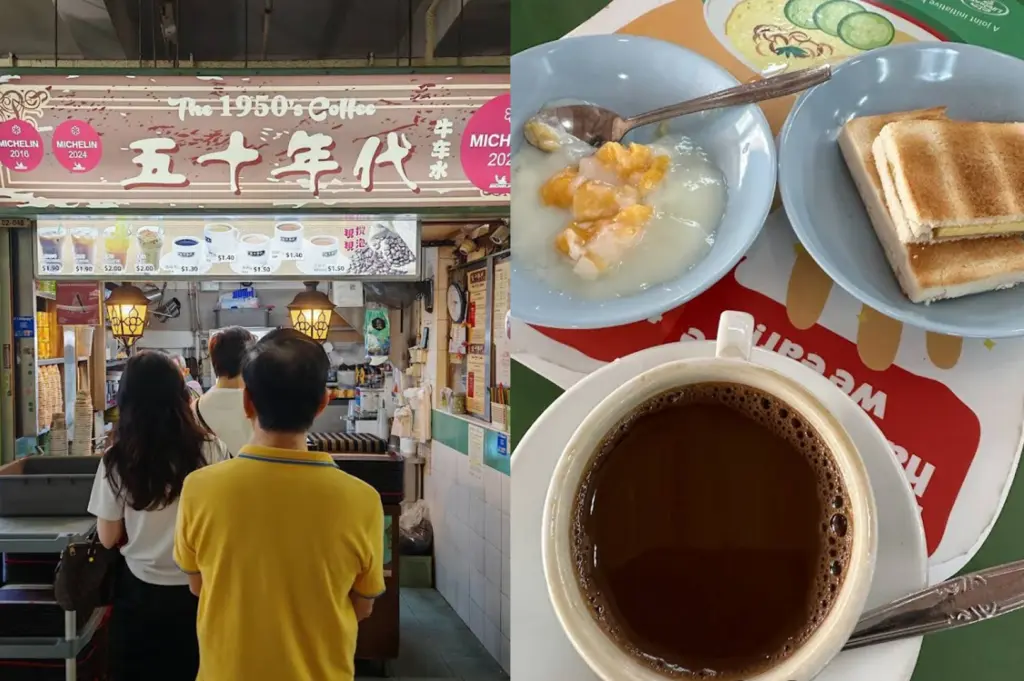
The 1950s Coffee (#01-90) is a heritage-style kopi stall that anchors many locals’ Maxwell routine. It’s not a food stall in the traditional sense, but no Maxwell hidden-eats trail is complete without proper kopi. The stall occupies one corner of the food centre closer to the Kadayanallur Street side. You’ll recognise it by the retro-style signage and traditional metal coffee pot setup, the kind that signals this isn’t just coffee, it’s a ritual.
What to order here:
Kopi (classic, S$1.30–S$2)
Kopi C Siew Dai – less sweet, with evaporated milk
Teh – if you’re not a coffee person
Iced Kopi – for Singapore’s perpetual heat
Kaya toast and soft-boiled eggs (when available) – the traditional pairing
Beyond the 5: More Maxwell Food Centre Spots to Try
6. Hock Lai Seng Teochew Fishball Bak Chor Mee – An Old-School Noodle Stall Many Visitors Walk Past
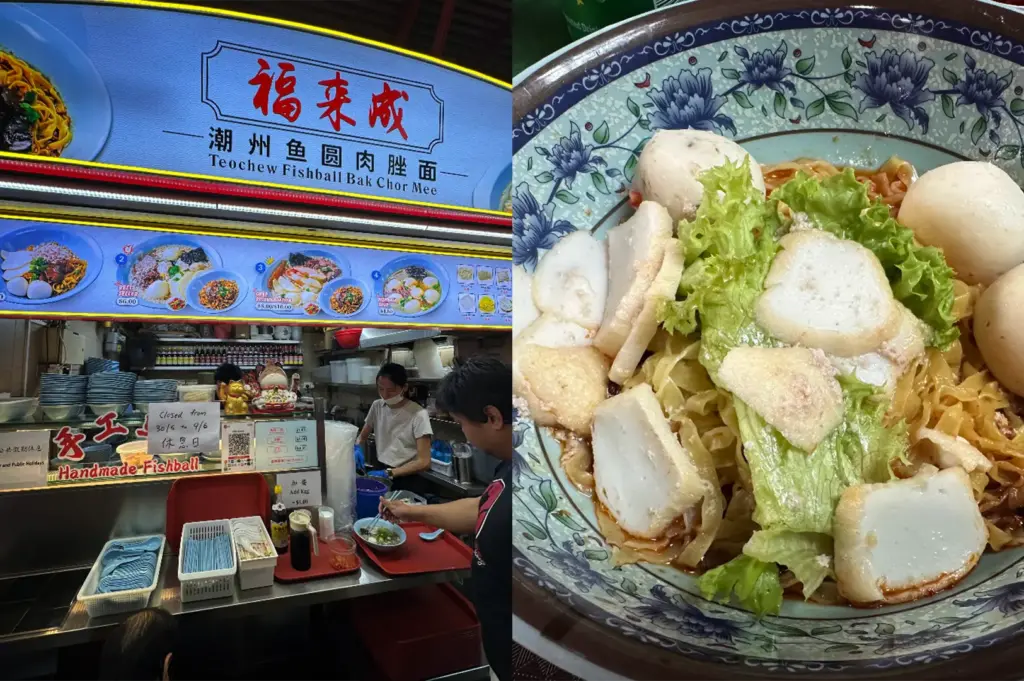
Hock Lai Seng Teochew Fishball Bak Chor Mee is one of those Maxwell Food Centre stalls that can easily be overlooked among the larger queues. Located within the bustling hawker centre, this stall focuses on a simple formula: springy noodles, fish balls, minced meat, and a well-balanced savoury sauce that keeps regulars returning. While many visitors head straight for chicken rice, locals looking for a comforting bowl of noodles often stop here instead.
What to order here:
Bak Chor Mee with fish balls
Mee Pok with minced meat and chilli sauce
Fishball noodles (dry version)
Mee Kia with sliced fish
Extra fish balls if you prefer a lighter meal
7. Fu Shun Shao La Mian Jia – Roast Meat Noodles Beyond the Chicken Rice Crowds
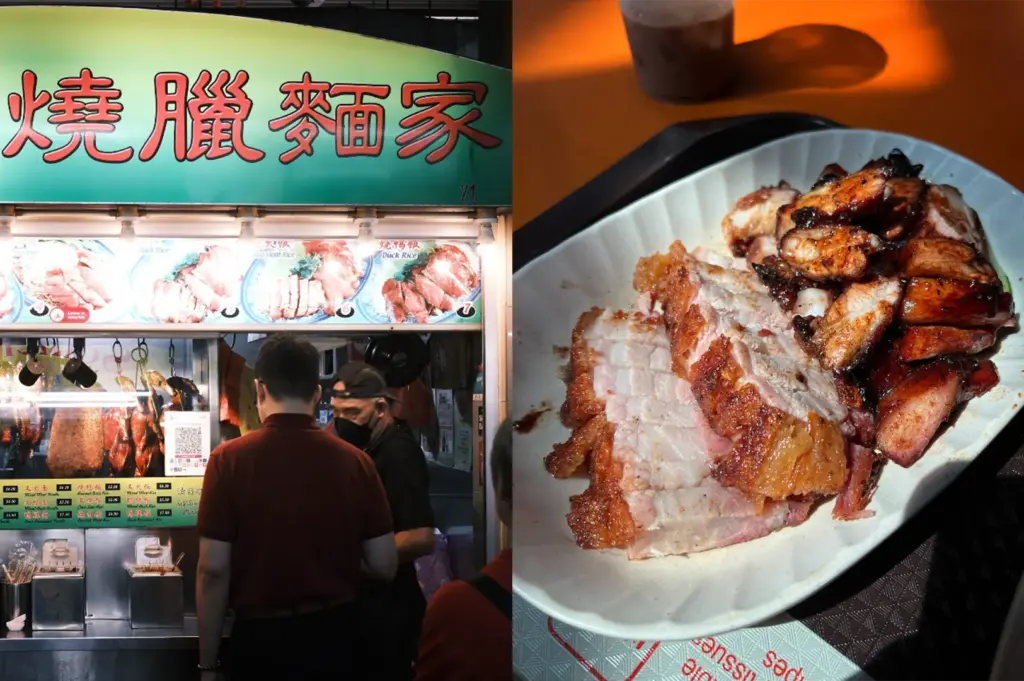
Fu Shun Shao La Mian Jia is another lesser-known stall tucked among the many hawker stalls of Maxwell Food Centre Singapore. While visitors often focus on Hainanese chicken rice, this stall specialises in char siew, roast duck, and noodle dishes that provide a different side of Maxwell food. The stall has built a quiet following among office workers and regulars who appreciate roast meats without the long queues.
What to order here:
Char Siew Noodles
Roast Duck Noodles
Combination Char Siew and Roast Duck Noodles
Wanton Noodles with char siew
Dry noodles with chilli sauce and roast meats
8. Tian Tian Hainanese Chicken Rice – The Stall That Put Maxwell Food Centre on the Map
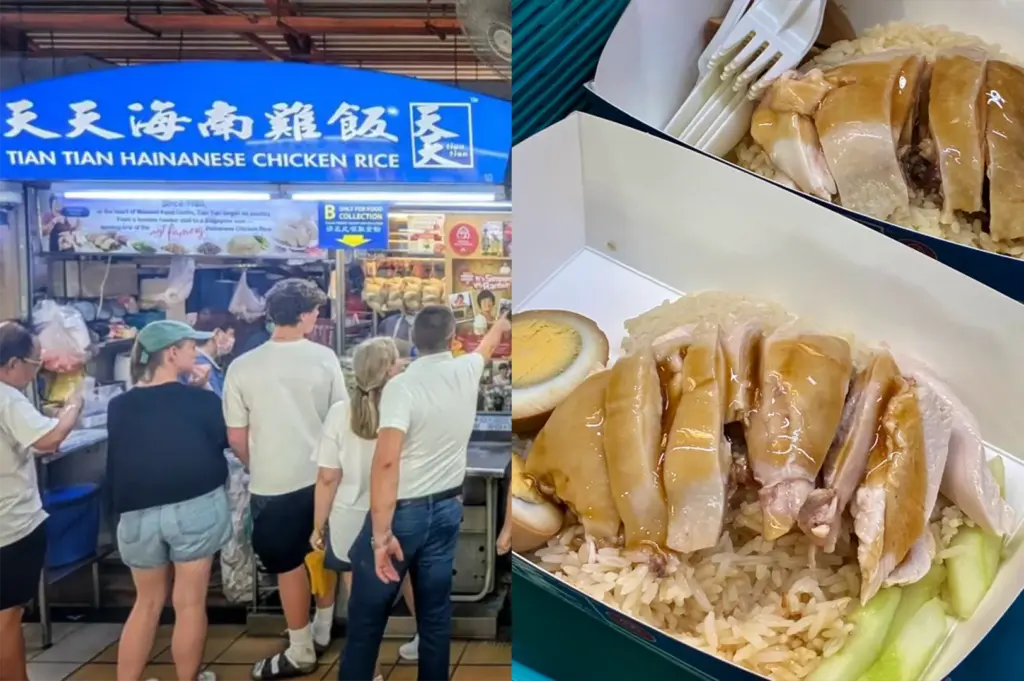
No discussion of Maxwell Food Centre would be complete without Tian Tian Hainanese Chicken Rice. The stall gained international attention through appearances by Anthony Bourdain, Gordon Ramsay, and numerous food videos that introduced Maxwell Singapore to a global audience. Long queues are now part of the daily scene, making it one of the most recognised chicken rice stalls in the country.
What to order here:
Hainanese Chicken Rice
Steamed Chicken Rice
Roasted Chicken Rice
Extra chicken with rice
Chicken rice with additional chilli sauce
9. Ah Tai Hainanese Chicken Rice – A Familiar Alternative with Shorter Queues
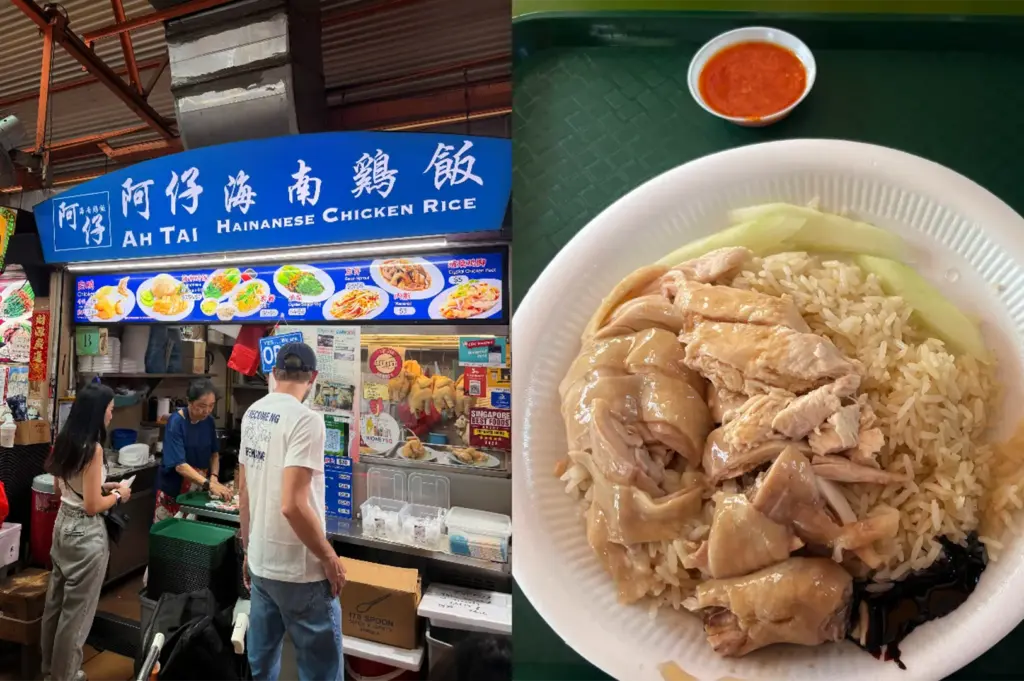
Ah Tai Hainanese Chicken Rice was started by a former head chef from Tian Hainanese Chicken Rice and has since developed its own loyal following. Many visitors appreciate that the stall offers a similar style of Hainanese chicken rice while often attracting shorter queues during busy lunch periods.
What to order here:
Signature Hainanese Chicken Rice
Steamed Chicken Rice
Additional chicken portions
Chicken rice set with soup
Chicken rice with extra chilli sauce
10. Danlao – A Modern Addition to Maxwell Hawker Centre
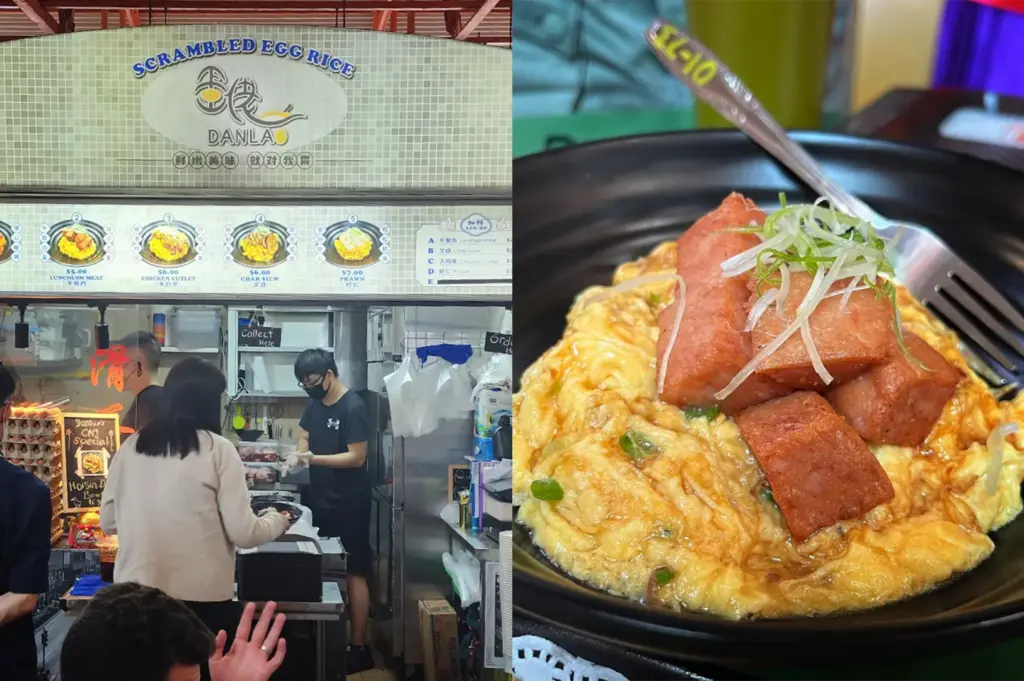
Danlao represents a newer generation of hawker food at Maxwell Food Centre Singapore. The stall became popular for its silky scrambled egg rice bowls and comfort-food combinations that blend familiar ingredients with contemporary presentation. It stands out from many traditional hawker stalls while still remaining accessible and affordable.
What to order here:
Scrambled Egg Rice with Chicken Cutlet
Luncheon Meat Egg Rice Bowl
Char Siew Egg Rice Bowl
Double Protein Rice Bowl
Scrambled Eggs with rice and chilli sauce
Practical Details for Visiting Maxwell Food Centre Stalls
Location and Access: Maxwell Food Centre is at 1 Kadayanallur Street in Singapore’s Chinatown, easily reached via Maxwell MRT station. It’s a busy spot popular with locals and tourists.
Payment and Pricing: Most stalls accept cash only. Dishes like Maxwell Fuzhou Oyster Cake and special Shanghai tim sum are affordable, often priced similar to other local hawker fare. Expect under $10 SGD for most meals, including grilled fish rice and meat rolls.
Peak Hours and Seating: The centre is busiest during lunch (12 PM to 2 PM) and dinner (6 PM to 8 PM). Locals often place personal items on seats to reserve them. Seating is limited during peak times, so plan ahead.
Must-Try Items and Variety: Beyond famous chicken rice, explore tapioca cake, fried dumplings, century egg dishes, and nasi ikan bakar. Don’t miss Ye Lai Xiang Tasty Barbecue for Hainanese-style western food with crinkle cut fries and soft buns.
Final Tips for Enjoying Maxwell Food Centre's Hidden Eats
Maxwell Food Centre is not only about its most famous chicken rice and fish porridge stalls. The hawker stalls that don’t make it into viral content often serve the most consistent, satisfying everyday meals, the kind that office workers line up for between meetings, the kind that residents return to week after week.
For more hidden eats around the local favorites, be sure to check out our article on Newton Food Centre: Beyond The Spotlight Stalls.