“What’s hidden isn’t always out of sight. Sometimes, it’s just part of the routine we stopped noticing.”
I passed by this stall three times before I stopped. Not because it stood out, but because it didn’t.
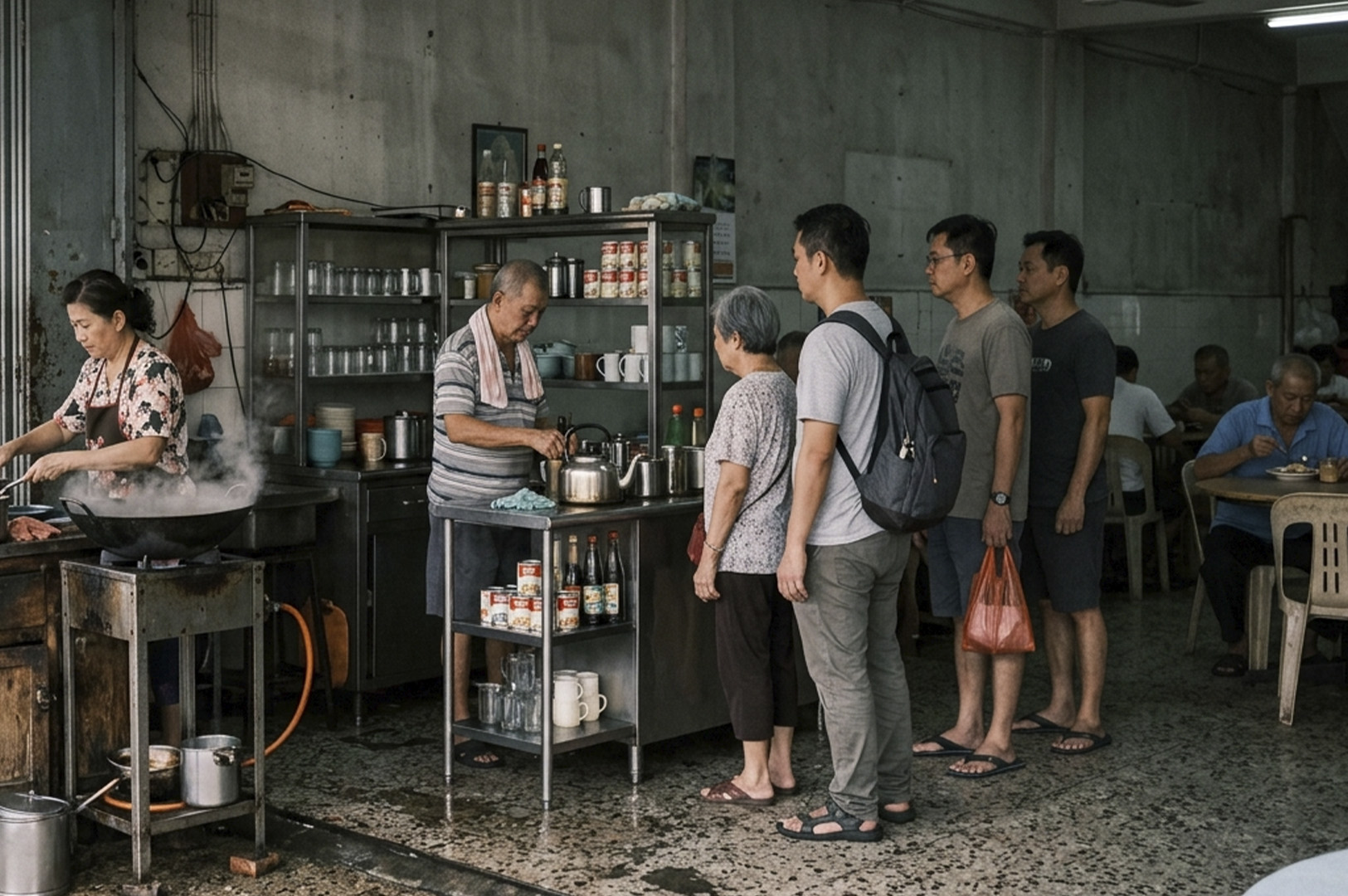
It sits in the same corner of the kopitiam, just beside the drinks stall, where the light comes in a little softer in the morning. The signboard hasn’t changed. The menu looks the same as I remember. Even the way the queue forms, slightly to the side, never quite straight, feels familiar.
On the fourth visit, I ordered.
Not out of curiosity, but because it felt like something I should have done earlier.
The uncle didn’t ask many questions. Just a short nod, a quiet confirmation, and the routine began. Ingredients were handled without hesitation. Movements were steady, like they had been repeated enough times to no longer need thought.
A few tables away, someone was already halfway through the same dish. Another regular came by, didn’t look at the menu, and stood in line without checking his phone. No one seemed to be in a rush, but everything moved.
I sat down with the plate and realised there wasn’t anything surprising about it.
And that was the point.
Some places don’t need to change to remain relevant. They stay because people return. Not once, not for a review, but again and again, until it becomes part of their day without them thinking about it.
We often think of hidden gems as places waiting to be discovered.
But here, nothing was waiting.
It had always been here, quietly consistent, folded into the routine of the people who pass through this kopitiam every morning. Hidden, not because it’s unseen, but because it blends in so completely with daily life that it no longer asks for attention.
I finished the meal, returned the tray, and walked out the same way I came in.
The stall stayed where it was.
And tomorrow, it will likely be the same.