

By Nur Aisyah Rahman
“What makes a place stay isn’t always the food. Sometimes, it’s the way people return to it.”
I noticed it before I ordered.
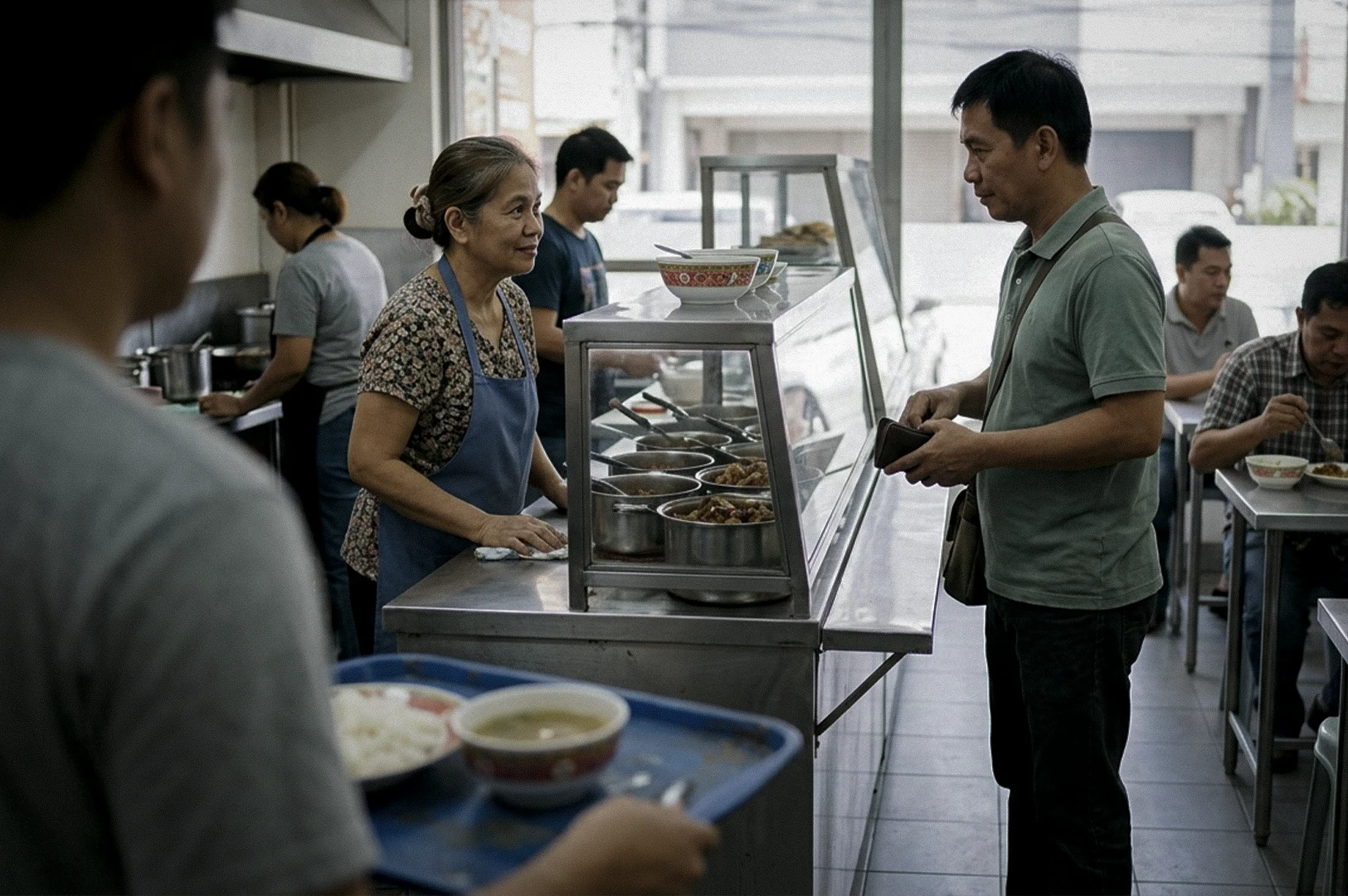
A small exchange, nothing more than a nod between the auntie at the stall and the man in line. No words, no gestures beyond that. But it felt complete, like something already understood.
The queue moved slowly, but no one seemed impatient. A woman behind me stepped forward slightly to make space for someone carrying a tray. At the drinks stall, a regular’s order was prepared before he reached the counter.
These things happen quietly.
If you’re not looking, you might miss them.
When it was my turn, I placed my order carefully, still unfamiliar with the rhythm of the place. The auntie responded with a short acknowledgment, then continued without pause. Around me, others seemed to move with more certainty, knowing where to stand, when to step forward, how to wait.
I found a seat nearby and watched as the space settled back into itself.
People came and went, but not entirely. Some returned with friends. Others stopped to speak, even briefly. A shared table filled, then emptied, then filled again. Nothing felt temporary, even though everything was moving.
It made me think about how some places are held together.
Not by design, or popularity, but by people who return often enough to make it feel continuous.
Hidden gems aren’t always quiet because they’re unknown.
Sometimes, they’re quiet because they belong to the people who already know them.
I finished my meal and placed the tray back.
As I left, the auntie nodded again, this time, in my direction.
It was small.
But it felt like the beginning of something.