

Answering Your Search: What Makes Bedok 85 Market Special Today?
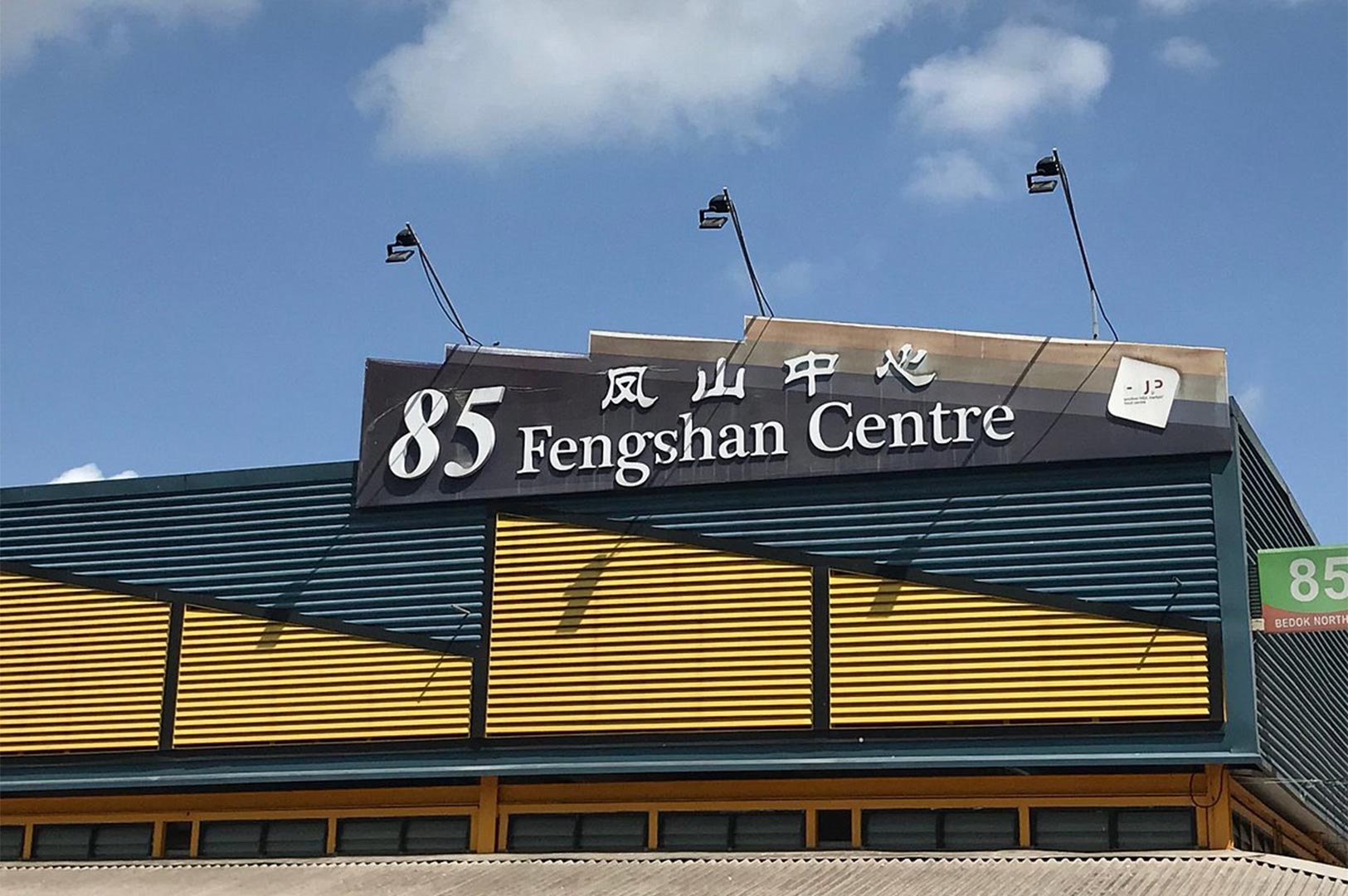
Steam curls upward from a bowl of soup at stall #01-07. Two tables over, a family splits a plate of sambal stingray, the char marks still smoking. It’s past 10pm at Bedok 85, formally known as Fengshan Market & Food Centre at 85 Bedok North Street 4, Singapore 460085, and the supper crowd has settled into its rhythm. This is what makes the place worth visiting in 2024: not just its famous bak chor mee rivalry or the well-documented pork porridge, but the dozens of quieter stalls that regulars return to without ever posting about them.
This piece focuses on those hidden plates. The bowls and bites that don’t dominate headlines but define the market’s everyday appeal. You’ll still find familiar names here—Xing Ji Rou Cuo Mian, Seng Hiang Bak Chor Mee, Chai Chee Pork Porridge—because orienting yourself around landmarks helps. But the real aim is to show what unfolds when you slow down, walk through without a checklist, and eat with attention.
The hawker centre operates on a rhythm that spans from breakfast regulars collecting chwee kueh before work, to after-dinner crowds arriving around 8pm, to the dedicated supper seekers who stay past midnight. Some stalls open as early as 4:30am; others don’t fire up their woks until late afternoon. This layered schedule makes Bedok 85 part of Singapore’s living food landscape, a place where legacy stalls, late-night crowds, and evolving tastes coexist naturally.
Consider this a narrative food discovery guide rather than a ranked list. Use it to plan your next unhurried visit, or simply to understand why places like this endure beyond trend cycles.
Finding Your Way Around Bedok 85: Layout, Atmosphere, and Neighborhood Rhythms
Bedok 85 sits between older HDB blocks in Fengshan, a residential pocket that feels slightly removed from the busier Bedok Town Centre. The nearest MRT stations are Bedok and Bedok Reservoir, both requiring a short bus ride or 15-minute walk. Bus services 18, 222, and 225 stop within a few minutes’ walk. If you’re driving, prepare for the parking hunt that locals know too well, spaces fill fast after dark, and you may circle the adjacent blocks before finding a spot.
The physical layout divides into two main zones. The wet market section handles fresh produce and raw ingredients during morning hours, while the cooked food centre wraps around it with hawker stalls numbered in the #01 series. Central aisles connect the stalls, and certain corners have become known for specific clusters: Chan BBQ at #01-24 and 75 Ah Balling Peanut Soup at #01-25 anchor one corner, while the famous two stalls of bak chor mee (#01-07 and #01-05) sit side by side nearby, with Ah Poh Minced Meat Noodle at #01-18 offering a third, gentler option.
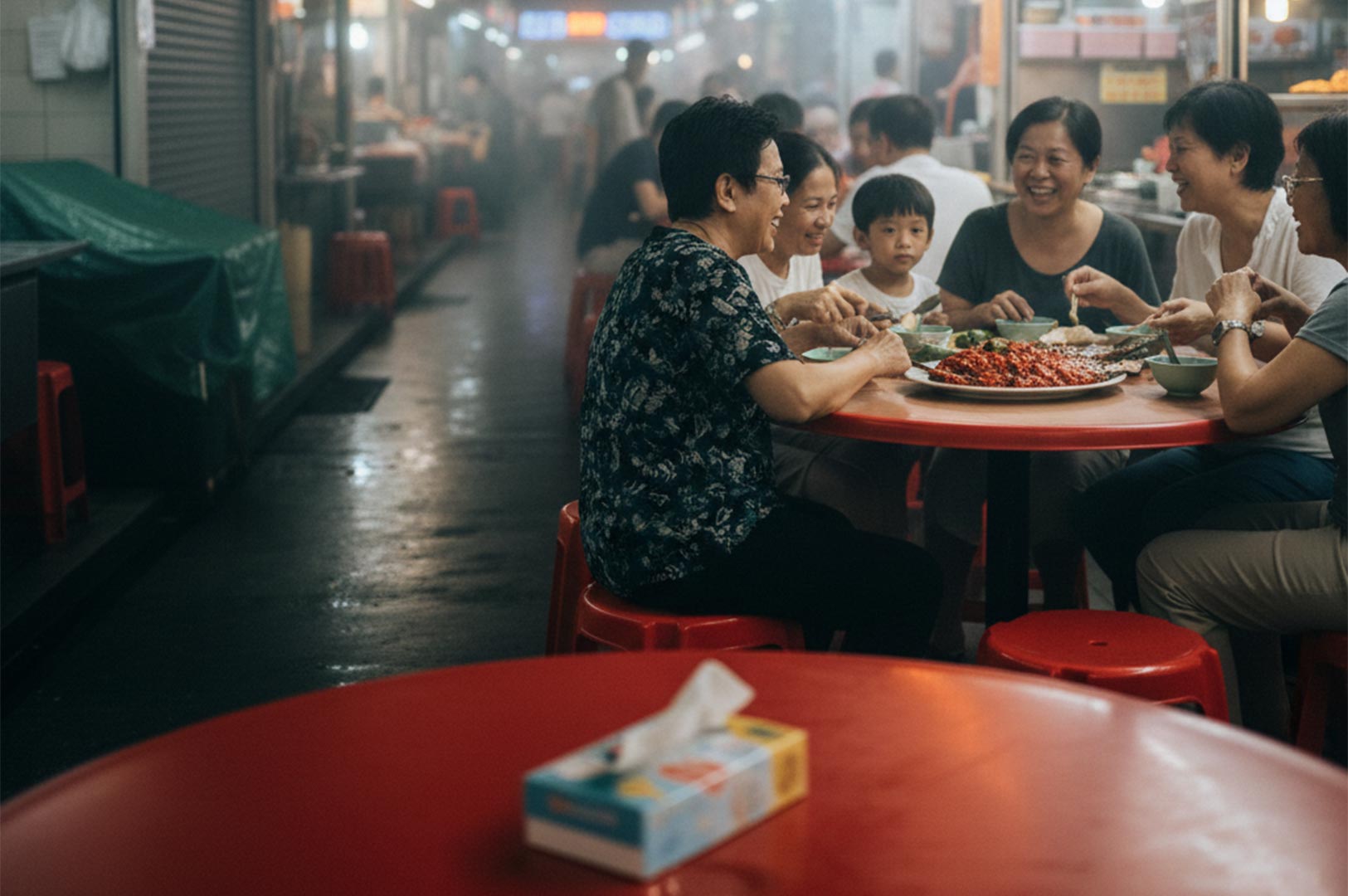
Different time slots bring different crowds. Early mornings belong to Siang Siang Chwee Kueh at #01-31 and Swatow Wanton Noodle at #01-50, where regulars eat quickly before heading to work. By late afternoon, the transition begins—porridge stalls light their burners, BBQ vendors start marinating wings. Peak supper hours from 9pm to midnight see the market at its loudest, with tables filled by groups ordering fried oysters, sambal stingray, and satay to share alongside individual bowls of noodles.
Watch how regulars move through the space and you’ll notice patterns. Residents cut through from the carpark, plastic bags swinging, already knowing which stall they’re headed for. Families share tables without asking, the unspoken hawker centre code in effect. Solo diners nurse bowls of porridge while scrolling phones. Kids chase each other between the aisles while parents flag down the satay uncle. Tissue packets reserve seats. The clatter of metal trays being cleared blends with Hokkien dialect and laughter.
This is Bedok 85’s atmosphere—functional, communal, unapologetically local.
Hidden Food Gems: Understated Stalls Worth Slowing Down For
Hidden gems at Bedok 85 aren’t hidden in the literal sense, they occupy numbered stalls in plain sight. But they’re rarely the first to be named in guides. These are the places that quietly command steady queues from people who know exactly what they’re coming back for.
Fu Zhou Oyster Cake (#01-39)
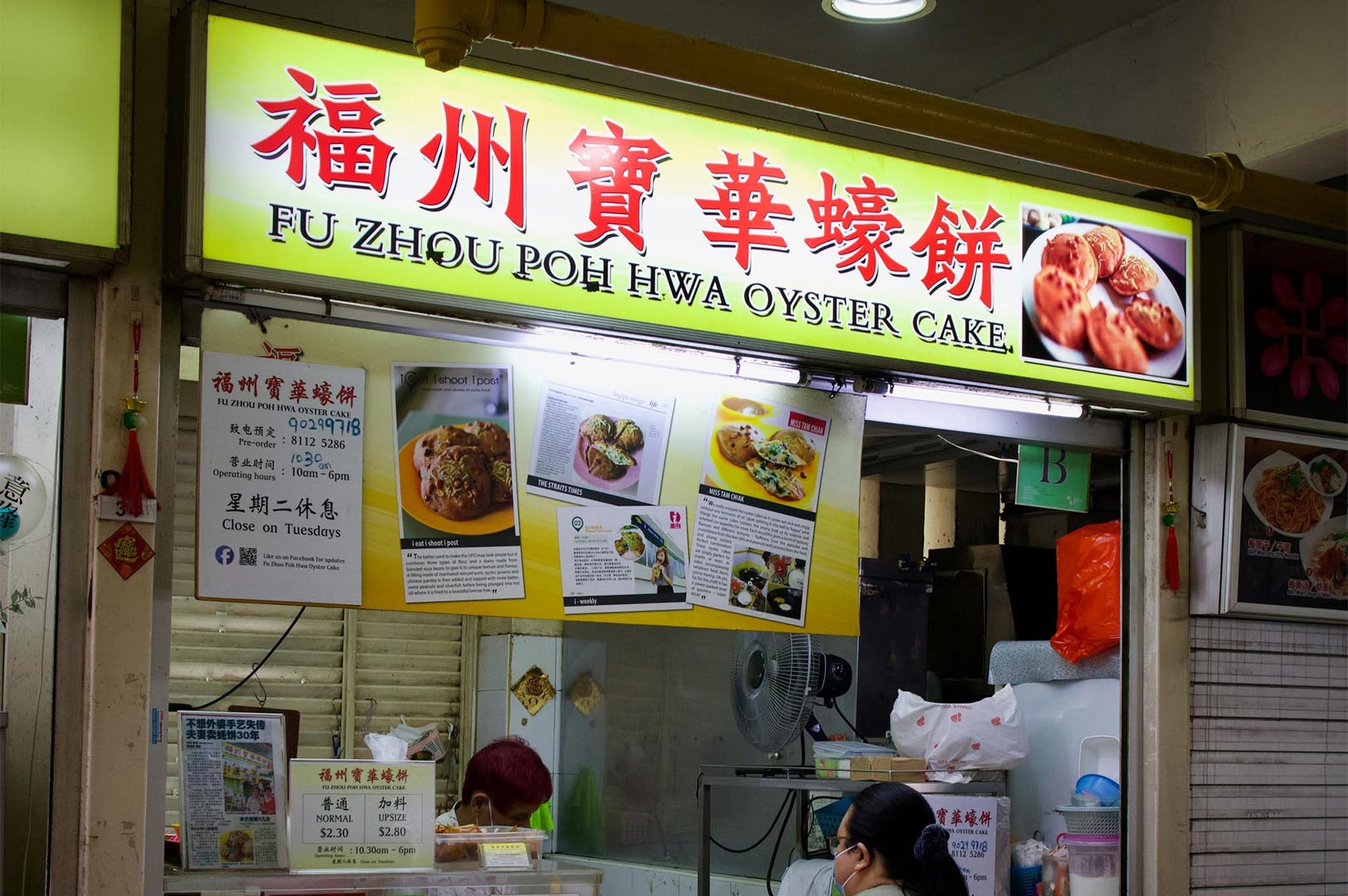
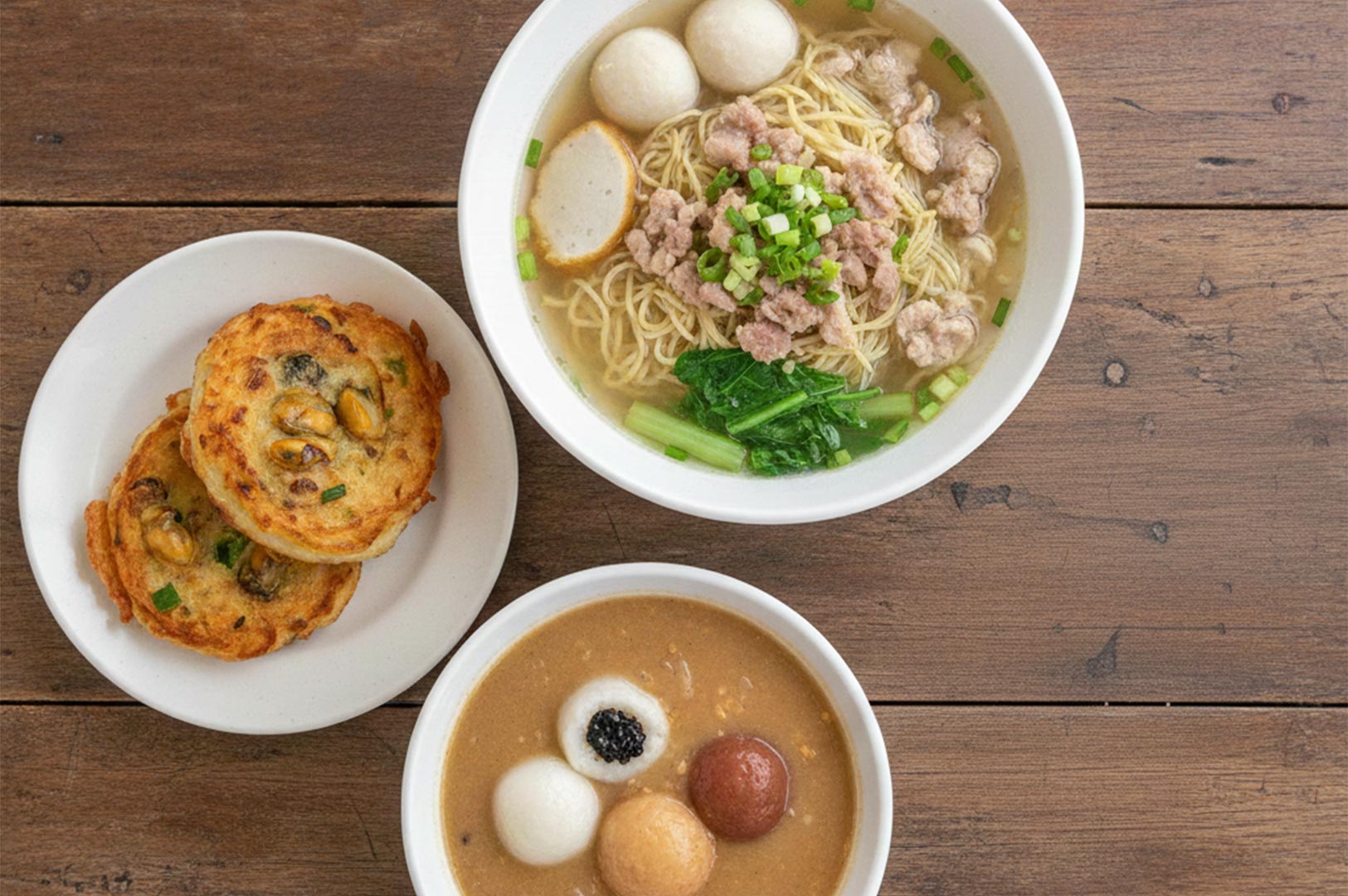
The oyster cake stall has origins stretching back to the 1980s, serving a dish that feels increasingly rare in modern Singapore. Each oyster cake is a deep-fried pocket stuffed with minced pork, fresh oysters, peanuts, and chives, cooked to order in a heavy wok of oil. The cakes arrive wrapped in brown paper bags, staying crisp for the few minutes before you bite through the shell to reach the filling inside. Standing at the stall, you smell the oil crackling, watch the uncle work through orders without rushing. This is a snack that represents a disappearing craft—labor-intensive, not particularly profitable, sustained by regulars who’ve been eating here for decades.
Shi Wei Da Satay Bee Hoon (#01-41)
During the day, this stall operates as a Teochew porridge vendor. After dark, it transforms into one of Bedok 85’s most reliable draws: satay bee hoon. The 35-minute queue speaks to its quality—thick peanut sauce coating bee hoon, kangkong, bean sprouts, pork slices, liver, and fresh cockles. Portions at $3-$4 are generous and filling, the dish served cooling slightly at the stall’s edge while you wait. Michelin Bib Gourmand recognition has brought some attention, but somehow it still hasn’t turned into a “tourist” stall. Regulars outnumber first-timers, and the peanut gravy remains as thick and addictive as ever.
Omage Food (#01-69)
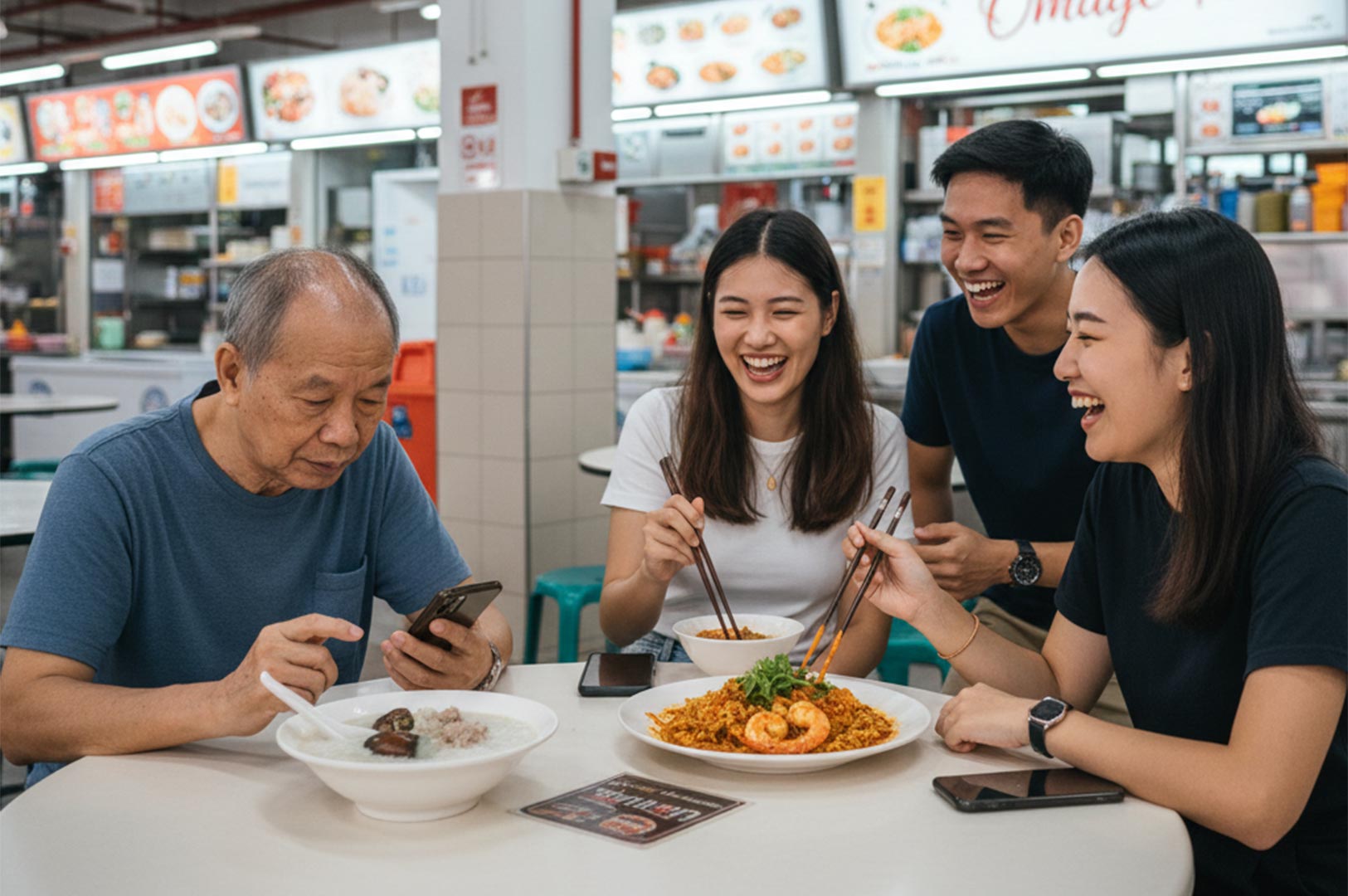
For something slightly unexpected, Omage Food offers dry laksa—the familiar coconut-based gravy served without soup, the noodles coated rather than swimming. It’s a quieter counterpoint to the wetter, louder dishes nearby, appealing to those who want laksa flavor without the mess of slurping broth. The stall represents how Bedok 85 evolves without erasing its past, newer offerings finding space alongside decades-old recipes.
Shanghai Xiao Long Bao (#01-16)
Dumpling steamers feel slightly unexpected in a place better known for noodles and porridge, but Shanghai Xiao Long Bao has carved out its niche. Wallet-friendly xiao long bao and shui jiao arrive in bamboo baskets, the dumplings stuffed with meat and sealed with pleated skin. They won’t rival the versions at dedicated Shanghai restaurants, but they offer variety for groups wanting to share plates beyond the usual hawker fare.
Bedok 85 in the Wider Singapore Food Landscape
Bedok 85 functions as a neighborhood institution rather than a destination hawker centre. Tourists rarely make the trek east specifically for this market; the regulars are mostly residents from surrounding HDB blocks, students from nearby schools, and workers who’ve been eating here for years.
Stalls like Fu Zhou Oyster Cake, Swatow Wanton Noodle, and Chai Chee Pork Porridge endure because of simple factors: family recipes passed down, affordable prices that haven’t inflated dramatically, and the comfort of knowing exactly what you’ll get each visit. When Xing Ji Rou Cuo Mian sells approximately 300 bowls daily, consistency matters more than innovation.
The coexistence of legacy stalls and newer offerings like Omage Food’s dry laksa illustrates how evolution happens without erasing the past. The 85 Fengshan food centre absorbed a significant renovation in 2020, reopening in June after Covid-19 delays, but the core character remained intact. East Coast Town Council maintenance keeps the space usable and pleasant—a practical foundation for the food community that operates here.
The food centre at blk 85 Bedok North represents something important in Singapore’s culinary landscape: a space where you can eat well without spending much, where quality is measured by repeat visits rather than Instagram posts, and where legacy matters without becoming a museum piece.
Planning Your Visit: Practical Tips and Food-Led Exploration
Getting There
Detail | Information |
|---|---|
Address | 85 Bedok North Street 4, Singapore 460085 |
Nearest MRT | Bedok MRT, Bedok Reservoir MRT (both require bus/walk) |
Bus Services | 18, 222, 225 stop nearby |
Parking | Limited; expect competition after 9pm |
Time-Based Suggestions
Early morning (5am-9am): Chwee kueh at Siang Siang, vegetarian bee hoon at Meow Xiang, wanton mee at Swatow
Lunchtime (11am-2pm): Quieter period; some stalls closed, others with shorter queues
Late afternoon (4pm-6pm): Porridge stalls fire up; good window before crowds arrive
Evening and supper (9pm-midnight): Full experience with BBQ, satay, fried oysters, pork porridge, and desserts
A Suggested Food Walk
Start at one of the noodle or porridge stalls, perhaps Chai Chee Pork Porridge or the soup version of bak chor mee at Xing Ji. Add a plate of ngoh hiang or Fu Zhou oyster cake to share while you wait. Move to the BBQ section for sambal stingray or chicken wings if dining in a group. Finish at 75 Ah Balling for peanut soup with glutinous rice balls, or tau suan if you prefer something lighter.
Leave room to improvise. If a queue catches your eye, join it. If a smell draws you toward an unfamiliar stall, follow it. The best discoveries at Bedok 85 often come from wandering.
Practical Notes
Bring cash; many stalls don’t accept cards
Expect to share tables during peak hours
Be patient with older hawkers who cook to order
Queues at Shi Wei Da can exceed 30 minutes—plan accordingly
Some stalls close early when they sell out; mornings and early evenings offer better odds
From Hawker Centre to Fine Dining
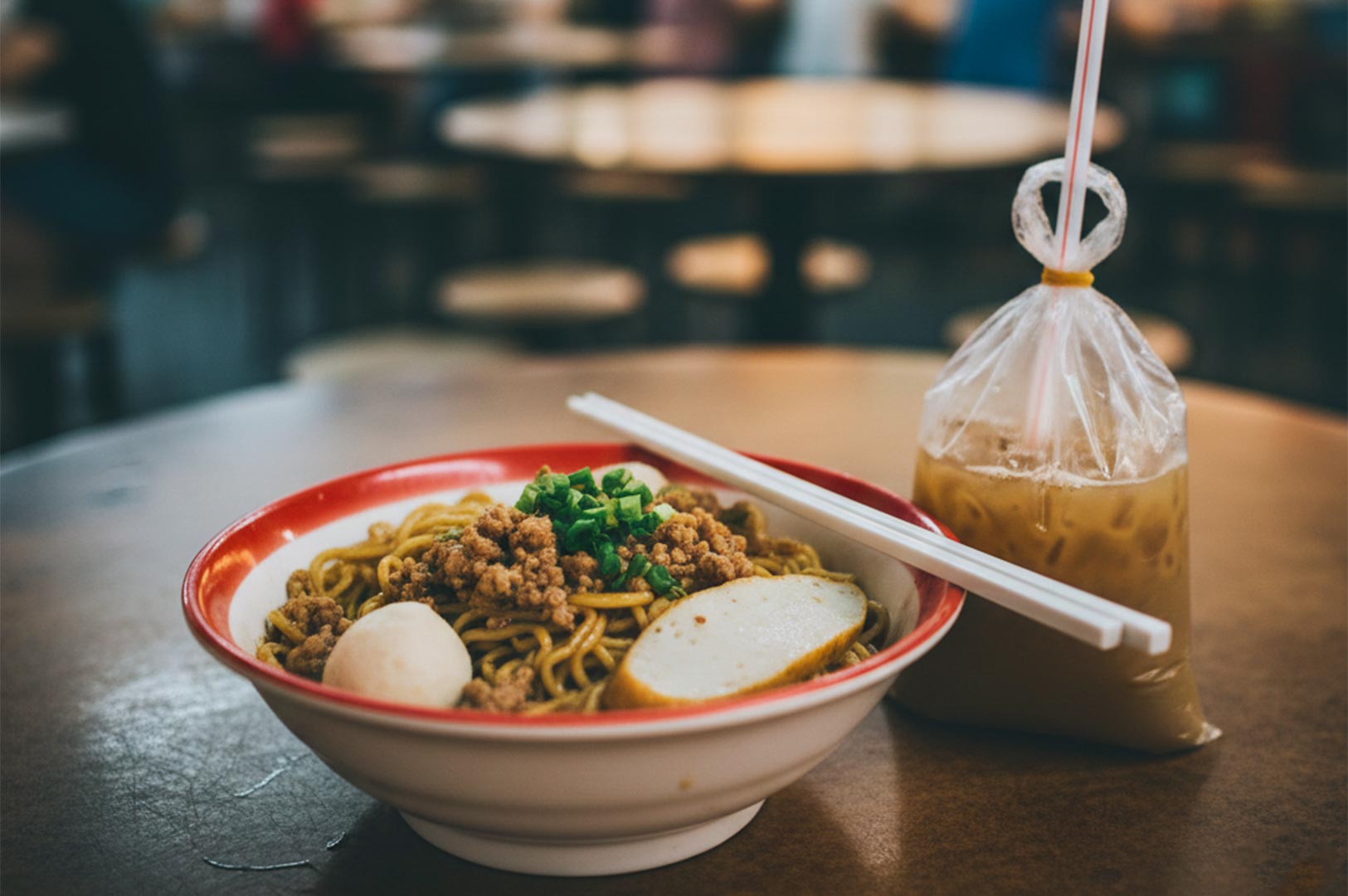
Singapore’s food culture spans a remarkable range. A supper at Bedok 85, generous portions priced under $5, communal tables, the clatter of trays represents one end of that spectrum.
Exploring both sides enriches your understanding of what Singapore offers. The hawker breakfast before work. The celebratory omakase dinner. They coexist naturally for those who eat with curiosity.
Return to Bedok 85 without chasing only the most famous stalls. Let curiosity guide what you eat next, not rankings, not viral posts, not the longest queue. Walk through slowly. Notice what smells good. Ask the uncle what he recommends. Sometimes the best bowl is the one you didn’t plan for.
We also invite you to explore beyond Bedok 85 Market and discover the vibrant flavors of Newton Hawker Centre. For a deeper dive into another iconic Singaporean food haven, check out our article, The Quiet Current of Newton Hawker Centre.