

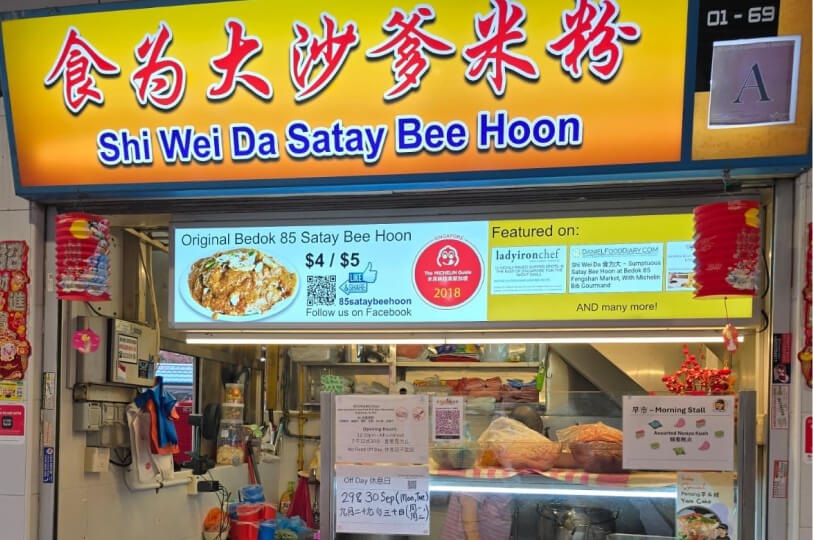
Shi Wei Da Fengshan: Satay Bee Hoon Hidden in Plain Sight
There are places that command your attention and then there are places that simply exist, waiting to be noticed. At Fengshan Market and Food Centre in Singapore, a place alive with sound and motion, it is easy to be pulled toward the bright lights and long queues. Yet, tucked away in this bustling environment is Shi Wei Da Fengshan, located at 85 Bedok North Street 4, #01-41, 85 Fengshan Market & Food Centre, Singapore 460085.
To find the best satay bee hoon, head to this specific stall within the food centre. Shi Wei Da has been serving satay bee hoon for over 20 years and is run by Ng Kim Song, who has dedicated more than two decades to perfecting this dish. The stall received the Michelin Bib Gourmand award in 2018, a testament to its quality and consistency. There is often a queue at Shi Wei Da, especially during dinner and supper hours, so be prepared to wait for your turn.
The stall is often passed by, a brief stop in the peripheral vision of someone heading for more famous offerings. There is no performance here, no dramatic clanging of woks or theatrical flourishes. There is only the steady, rhythmic work of its keeper. He moves with an economy of motion born from decades of repetition, his focus entirely on the task at hand. It is this very lack of spectacle that makes it a fixture, a constant in a world of ever-changing food trends.
If you visit Shi Wei Da, please comment below with your experience or any updates about the stall, and help verify details such as opening hours or menu to keep this information accurate for future readers.
The Quiet Ritual of a Dish
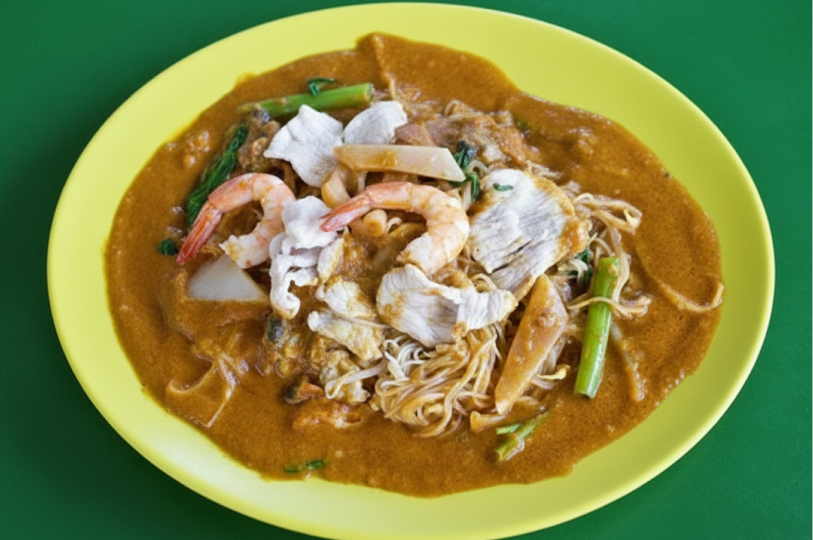
Ordering the Satay Bee Hoon at Shi Wei Da Fengshan is a simple, direct affair. A quiet word, a nod, and the process begins. The components are assembled with a practiced hand: a tangle of blanched rice vermicelli, stalks of kangkong, pieces of cuttlefish, and slices of pork. Each ingredient is added with purpose, not flair. The magic happens when the sauce is ladled over everything, a rich peanut sauce with a smooth and aromatic quality, made from scratch using roasted peanuts and a blend of spices.
The preparation of this labor-intensive sauce results in a thick consistency that clings to the noodles, rather than being thin or diluted. The satay bee hoon at Shi Wei Da is known for its nutty and fragrant gravy, and the dominant flavor is a deep, fragrant nuttiness from the generous amount of ground peanuts. It’s a generous pour, not a delicate drizzle, a promise of the comforting meal to come.
To eat this dish is to engage in a quiet ritual. The first bite is a familiar comfort, the tasty, nutty, slightly sweet sauce grounded by a subtle warmth from the spices. For those who enjoy heat, spicy peanut sauce can be added to enhance the experience.
The bee hoon provides a soft, yielding base, while the tender slivers of pork and the slight chew of the cuttlefish offer texture. With each slurp, your mouth fills with the deep, nutty, and fragrant flavors of the sauce. It isn’t a dish of sharp, surprising contrasts. Instead, its components merge into a harmonious whole. It tastes like itself, consistently and reliably, plate after plate, year after year. This is its strength.
A Dish Woven into Daily Life
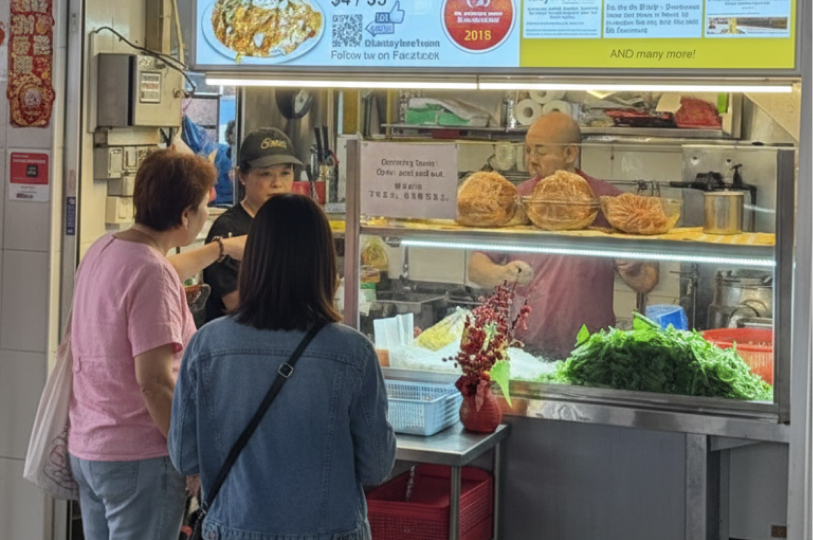
If you sit and watch for a while, you begin to see the patterns. You see the regulars who don’t need to look at the menu. They arrive at habitual times, the uncle on his way home from work, the couple sharing a plate for a quiet weeknight dinner. Their interactions with the stall owner are brief and familiar, built on years of shared understanding. They are not here for an event; they are here for a meal.
This is what makes the satay bee hoon at Shi Wei Da Fengshan so compelling. Rooted in Teochew (sin chew) heritage, satay bee hoon is said to have been created by Teochew immigrants who fused peanut gravy from Malaysian satay with Chinese ingredients, resulting in a dish that is both unique and deeply connected to Singapore’s culinary history. The preparation of satay bee hoon is labour intensive, especially when making the rich, aromatic sauce from scratch, a process that requires skill and patience. It is considered an underrated local dish in Singapore, reflecting a blend of cultural influences and showcasing the nation’s culinary heritage.
Over time, satay bee hoon has evolved to suit changing customer preferences, yet it remains a staple comfort food for many. It isn’t sought out for social media posts or as part of a culinary conquest. It is eaten because it is satisfying, because it is known, because it is there. It exists as part of a wider ecosystem of comfort foods that make up the heart of a neighborhood, a detail within the larger story of Bedok 85 Market and its hidden food gems. This dish serves a purpose beyond mere novelty; it provides sustenance and a quiet moment of pleasure in the middle of a busy day.
The people who eat here are not tourists in their own neighborhood. They are participants. They understand that the value of this stall lies not in its fame, but in its steadfastness. It’s a quiet agreement between the maker and the eater: I will continue to make this well, and you will continue to come.
Menu and Ingredients
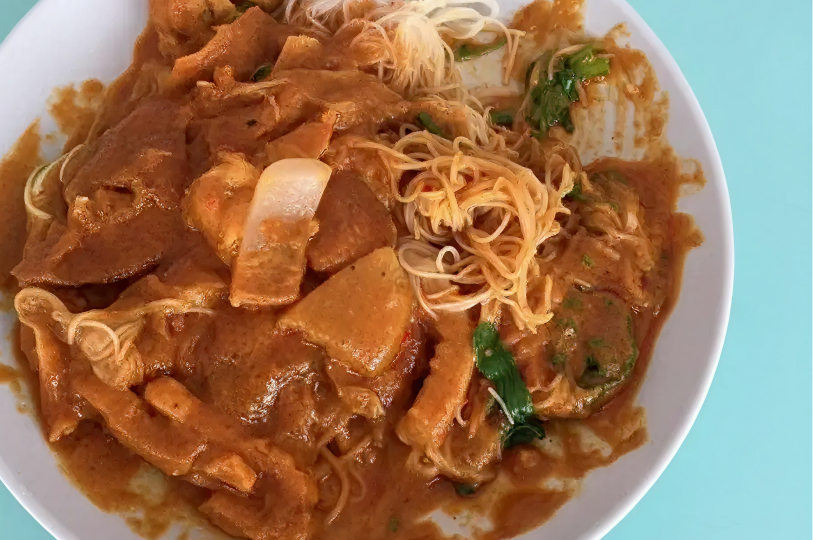
At Shi Wei Da Fengshan, the menu is a quiet celebration of Teochew satay bee hoon, a dish that brings together a medley of fresh, thoughtfully prepared ingredients under a blanket of rich, creamy satay sauce. The star of the show is the satay bee hoon, where thin bee hoon, delicate strands of rice vermicelli, form the base for a generous serving of toppings. Each plate is assembled with care: tender pork slices, creamy pork liver, and soft tau pok (fried tofu puffs) mingle with crisp beansprouts, vibrant kang kong (water spinach), and the occasional briny cockle or sweet prawn. Cuttlefish, cooked just right, adds a gentle chew that rounds out the dish.
The satay gravy is what sets Shi Wei Da apart. Made from scratch, the sauce is a labour of love, involving the slow roasting of peanuts and the careful blending of spices to create a thick, luscious, and nutty peanut sauce. Its aroma is unmistakable, fragrant, savoury, and just a tad sweet, with a creamy texture that clings to every strand of hoon and every slice of pork. For those who crave a little heat, a dollop of homemade sambal chilli can be added, infusing the dish with a spicy kick that lingers pleasantly.
Portion sizes are generous, whether you opt for the $3, $4, or $5 plate. Even the smallest serving feels abundant, with every ingredient coated in that luscious satay gravy. Diners can choose between the classic thin bee hoon, yellow egg noodles, or a combination of both, allowing for a personalized experience with each visit. The freshness of the ingredients is evident in every bite, from the crunch of beansprouts to the tender, savory pork and the creamy richness of the pork liver.
Shi Wei Da’s stall is open from 4pm to 12am, Wednesday through Monday, making it a perfect spot for a late afternoon or evening meal. Tucked away at 85 Bedok North Street 4, #01-41, this food centre gem draws both loyal locals and curious foodies, all seeking the comforting flavours of a well-prepared satay bee hoon. With its harmonious blend of textures and the unmistakable depth of its peanut sauce, this dish is more than just a meal, it’s a taste of Bedok’s culinary heritage, served up in generous portions and with quiet pride.
The Enduring Power of Being Overlooked
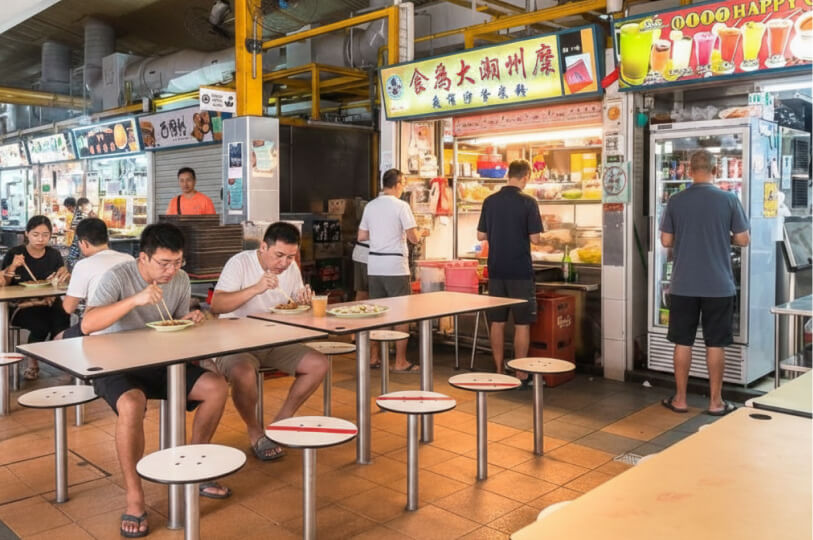
In a culture that often celebrates the new and the novel, there is a certain power in being hidden in plain sight. Shi Wei Da Fengshan thrives not in the spotlight, but in the comfortable shade of routine. Its longevity is a testament to the idea that good food doesn’t need to be loud. It doesn’t need to be “the best” or “a must-try.” It just needs to be good enough to bring people back.
This particular plate of Satay Bee Hoon endures because it has resisted the urge to become something more than what it is. Like the gentle warmth of the sun, it offers comfort and nostalgia, its satay sauce served warm to enhance both flavor and texture, warming the cockles of your heart. It remains a simple, well-executed dish served without fanfare. Its quiet existence allows it to be a personal discovery for those willing to look past the obvious, and a reliable comfort for those who have known it all along.
It’s a reminder that sometimes, the most meaningful food experiences are the hidden eats around us—those that don’t demand to be the center of attention. They are simply there, a quiet constant in a world that never stops changing.