

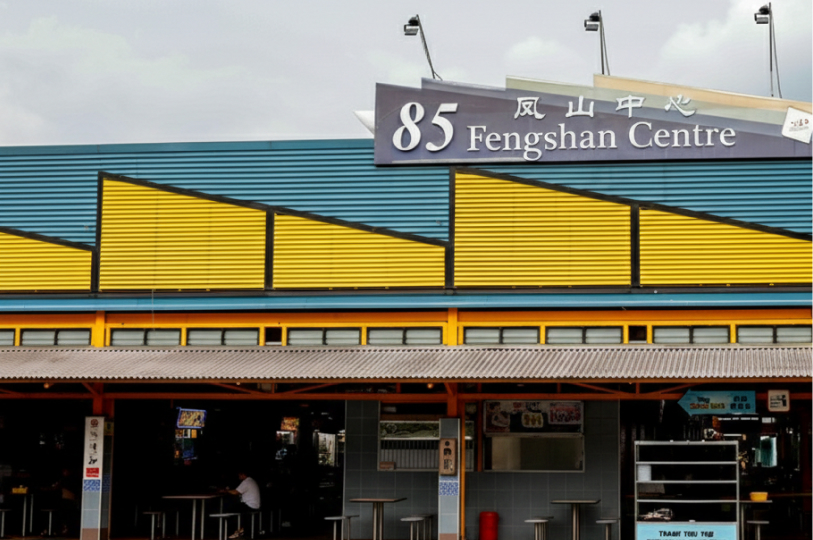
Fengshan Market and the Familiar Image of Bedok 85
To many, the name Bedok 85 conjures an immediate and vivid image. The smoky haze of grilling bbq chicken wings, the bright lights of famous stalls serving oyster omelette and fried oysters, and the lively clamour of a supper crowd spilling out from the hawker centre late into the night. It is a landmark food centre, defined by evening energy and familiar cravings.
But what if we were to walk past that familiar scene. What if Fengshan Market were treated not as a single famous food centre, but as the heart of a living neighborhood food ecosystem that changes with time of day?
Arrive in the late morning or early afternoon and a different Fengshan Market reveals itself. The air is clear. The pace slows. Hawker stalls are quieter, some shutters half raised, others already serving their regulars. This is the side of Bedok 85 that feeds residents before the night crowd arrives. It is not about spectacle. It is about routine.
The Morning Light Around Fengshan Food Centre
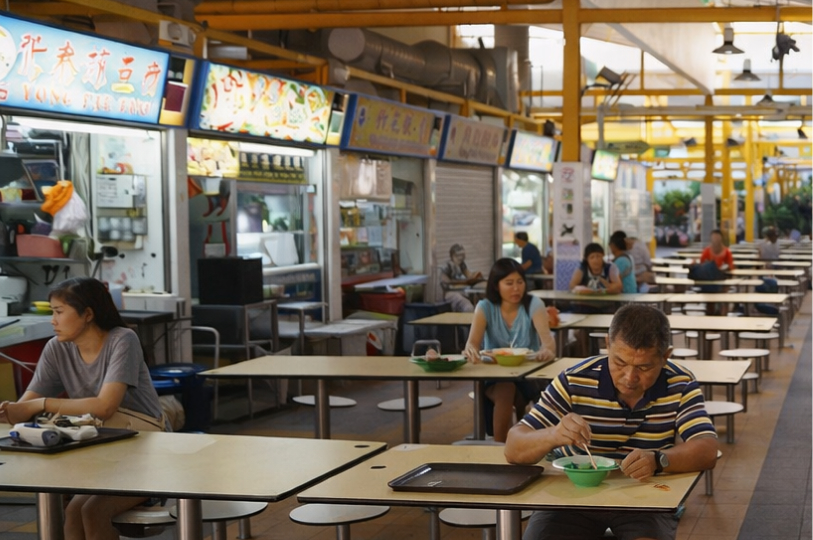
Our walk begins not inside the main Fengshan food centre, but across the service road at Block 84 near 85 Bedok North. Here, under the shade of the HDB block, a different rhythm unfolds. The coffee shop is open to daylight. Patrons linger. An elderly man sips green tea. A table of residents eat quietly, bowls close to hand.
The stalls here are not chasing fame. A preparation stall quietly serves soup bak chor mee made with springy egg noodles, minced pork, and a sweet pork stock that works without excess. Another stall sells pork porridge similar to chai chee pork porridge, the broth light but rich, dotted with lean pork meat and fresh Chinese parsley.
Nearby, a cai fan stall rotates dishes slowly. Fried garlic scents the air. Pork slices are neatly arranged. Teochew porridge sits ready for those who want something gentle. These stalls selling everyday food are the backbone of the neighbourhood.
There is no rush. Orders are exchanged with nods. The bak chor mee fix here might be dry and soupy version depending on preference. Usual egg noodles or mee pok. Fatty minced pork or lean. Chili served sizzling hot on the side, nice chilli paste sauce adjusted without fuss. This is local bak chor mee eaten as habit, not destination.
Inside the Hawker Centre and the Space Between Stalls
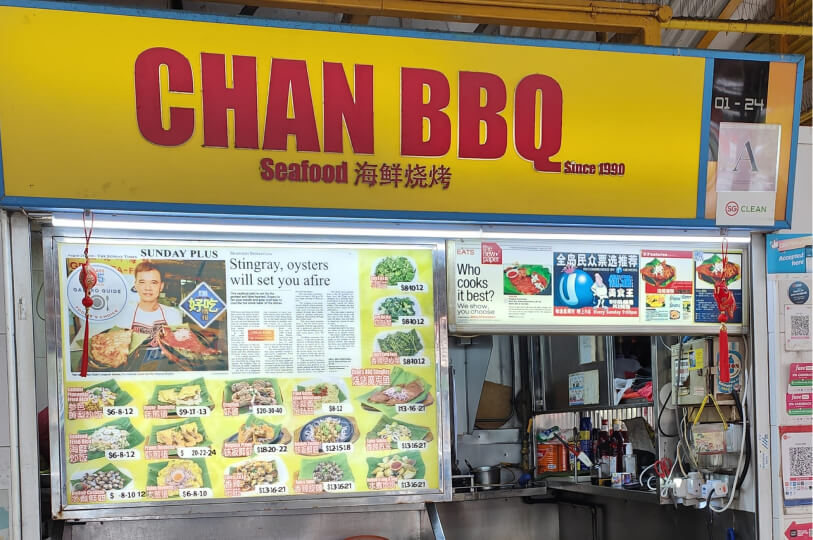
Walking back toward the main hawker centre, the atmosphere remains calm. Many famous stalls are dormant. Chan BBQ is still preparing. Xing ji rou cuo and hiang bak chor mee are quiet, their preparation stall movements slow and methodical.
This quiet window allows you to notice the architecture of the food centre. High ceilings. Stone tables. Fans turning steadily. A stall serves almond milk. Another prepares ginger soup bases for glutinous rice balls filled with crushed peanuts.
These traditional glutinous rice balls and peanut soup are not designed for queues. They are made for regulars. The rich soup, the thick peanut sauce, the warmth of ginger soup feels intentional. Nearby, a stall quietly prepares oyster cake, the batter folded with fresh cockles and tiao and spring onions.
This is the Fengshan Market that exists between moments. It is where hawker stalls prepare sweet pork stock, finely grinded minced meat, and salted fish mixed into dishes long before the crowds arrive.
Bak Chor Mee, Ji Rou Cuo Mian and the Quiet Classics
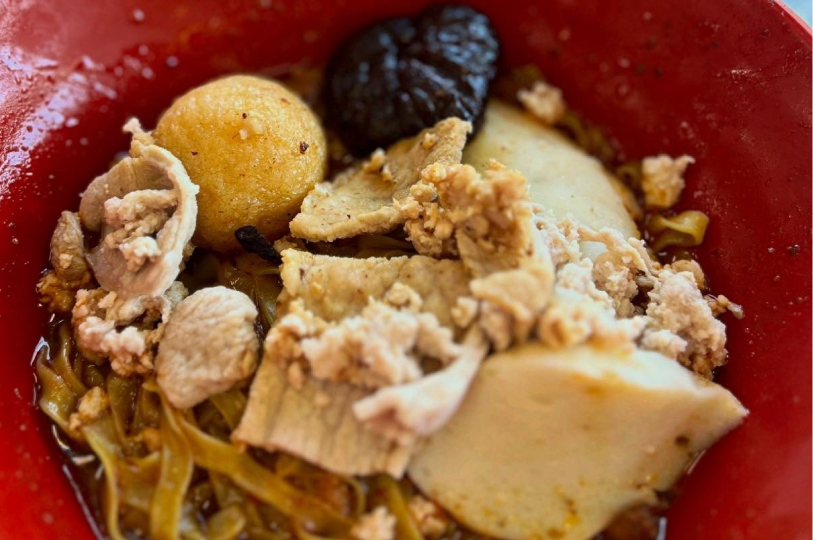
Bak chor mee here is not one thing. There is seng hiang bak chor. There is hiang bak chor mee. There is soup version and dry version. There is aka minced pork noodles with pork lard carefully controlled, salted fish added lightly, and well cooked noodles tossed until glossy but not heavy.
Ji rou cuo mian appears too. Chicken based meat noodle, springy egg noodles, barbecued char siew sometimes sliced thin on top. Sweet pork stock or chicken stock depending on stall. Xing ji rou cuo keeps it restrained. Lin yuan satay serves nearby, preparing pork satay with honeyed marinating sauce, char licious meat satay grilled slowly until nicely grilled.
These are not foods you photograph. They are foods you return to.
Peanut Soup, Oyster Omelette and the Daytime Quiet
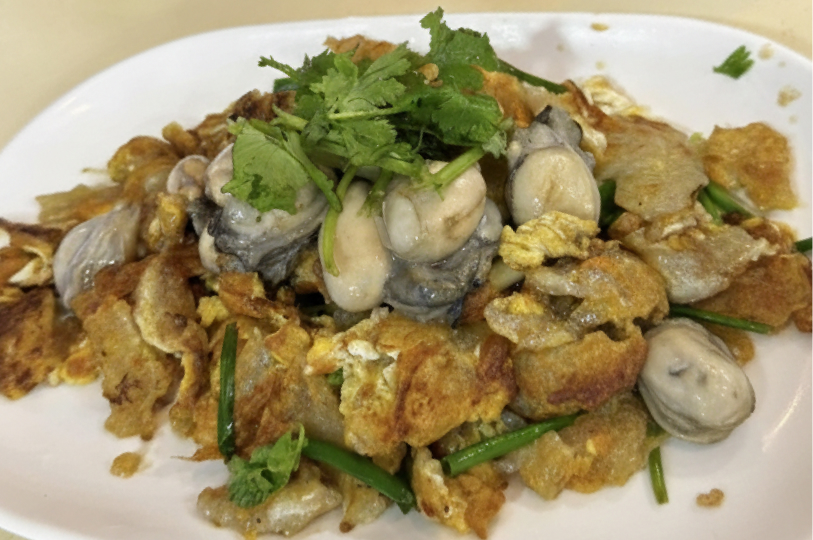
Further inside the Fengshan food centre, stalls selling peanut soup and glutinous rice balls continue their steady rhythm. Fried oyster place opens earlier than expected. Fresh cockles arrive in small trays. Oyster omelette batter is mixed quietly, salted fish added sparingly.
Oyster omelette here is not rushed. Fried oysters are folded carefully. The hot sauce is offered but never pushed. The oyster cake stall works at its own pace, relying on regulars who know when to come.
Nearby, carrot cake is prepared slowly. Salted fish mixed into white carrot cake rather than overwhelming it. Stronger garlic taste signals the stall’s preference rather than trend.
Beyond the Food Centre and the Surrounding Coffee Shops
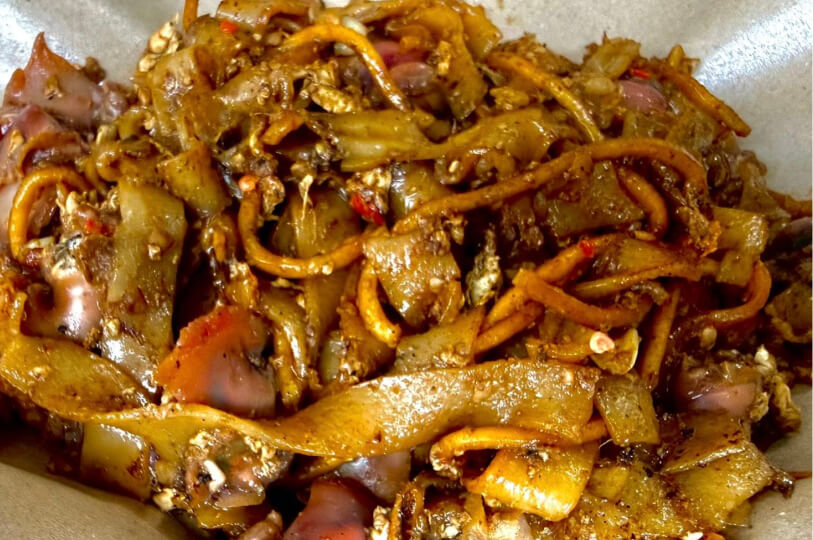
Moving beyond the main food centre, the surrounding coffee shops tell another part of the story. These are spaces where chicken rice is eaten without ceremony. Where char kway teow is served quietly, sometimes salted fish mixed in, sometimes plain. Some stalls serve char kway teow earlier in the day, before the wok heat of the night.
Hokkien mee appears in smaller portions. Fried Hokkien noodles here are lighter. Pork satay from lin yuan satay perfumes the air faintly. Satay bee hoon shows up occasionally, satay beehoon sauces thick but familiar, best satay beehoon sauces debated softly among regulars.
These are meals eaten because it is time to eat.
The Rhythm of a Lived In Fengshan Market
As afternoon fades, the rhythm shifts. Delivery riders arrive. BBQ chicken wings begin to sizzle. Chan BBQ fires up. Fresh cockles are washed again. The famous bak chor mee stalls prepare for night.
But having walked Fengshan Market slowly, you understand something important. The night exists because the day sustains it. The famous stalls rely on the same infrastructure that feeds residents at noon. The hawker centre is not only a supper destination. It is a working food centre that nourishes a neighbourhood.
The real story of Fengshan Market is not found only in bbq chicken wings, oyster omelette, or char kway teow queues. It is found in pork porridge eaten quietly. In ji rou cuo mian prepared without fanfare. In peanut soup ladled gently. In bak chor mee made the same way for decades.
To walk and explore here is to realize that Bedok 85 is not one place, but many layers living on top of each other. And the deeper you walk, the more the place reveals itself.